Where We Work
Manikgonj
Manikganj is a district in central Bangladesh, located just west of the capital city, Dhaka. It is approximately 63 km away from Dhaka, making it relatively close and well-connected. It is known for its natural beauty, rich cultural heritage, and strong agricultural economy.
As it is very near to the capital, the dependency and reciprocity between these two areas is high. Though there are other sub-districts near Dhaka, Manikganj is highly diversified among them. Not only that, even this area has different types of land within it. It is basically a flood plain region of Bangladesh. Along with this, there are some characteristics of wetlands as well as char lands (sandbar).
Moreover, this area is bounded by so many rivers that the land is highly fertile compared to other nearby districts of Dhaka. These rivers include: The Padma, the Jamuna, the Dhaleshwari, the Kaliganga, and so on. These rivers carry a considerable amount of silt to fertilize the topsoil.
The politics of Manikganj, which is less urbanized than other nearby areas of Dhaka city, are for its production system and the cultural inputs from different land patterns. Though it is very close to the capital, it has retained some of the uniqueness of the countryside still now. As the demand of the community is high, they need to fill them up as they are well oriented with the culture of the cities. But they do not have any other choice to fill their demand other than their own production system. That is agriculture.
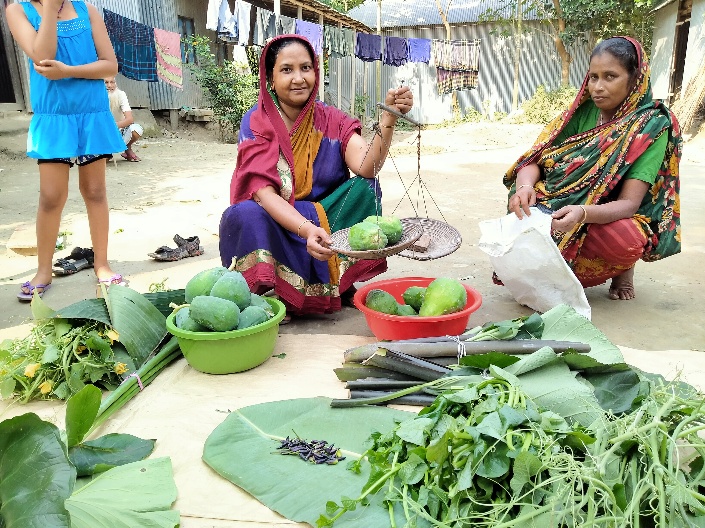
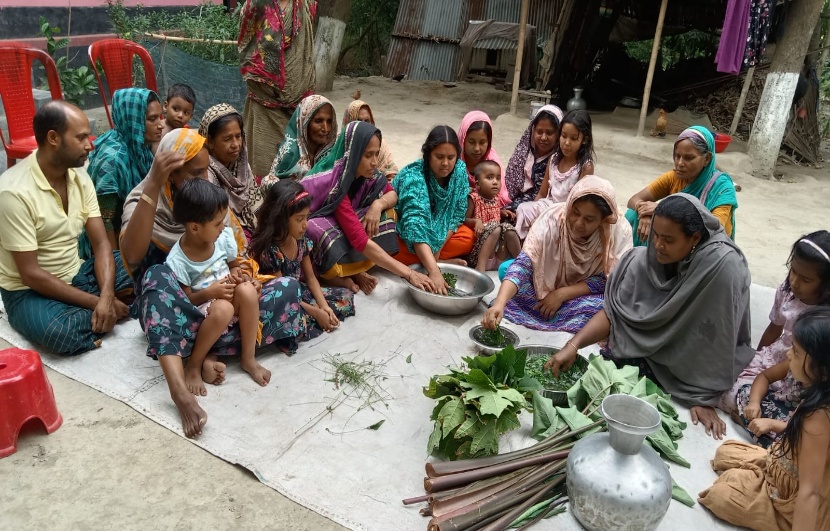
Manikganj is very famous for the regular demand for agricultural produces because of its diversified fields, and more or less every seasonal crop grows here. The transportation cost is low too for its shorter distance. As a result, to meet the demand for safe foods, conservation of agricultural crops is very necessary for Manikganj.
Despite being rich in agriculture and having fertile lands, some people’s demand is unlimited. So, to fulfill their demands they start to pollute the agriculture through incorporating modern energy intensive agriculture that relies on external inputs and market dependent chemicals. The energy intensive agriculture threatens farmer’s right on agriculture leading the farmer scientist to lose their seeds, indigenous knowledge and control on agriculture and it is the women farmers who become the worst victims of this commercial and energy intensive agriculture! Besides, the increased practice of modern energy intensive agriculture sidelines farmers and curtails their opportunities which leads to the decrease rate of indigenous knowledge practices in agriculture. Today, the culture as well as the agriculture are in high threat. On the other hand, lots of brickfields are excavating the fertile nutrient rich topsoil, which is the life for the crops. The remaining require more and more chemicals for cultivation. Therefore, the price of the commodities is also increasing rapidly.
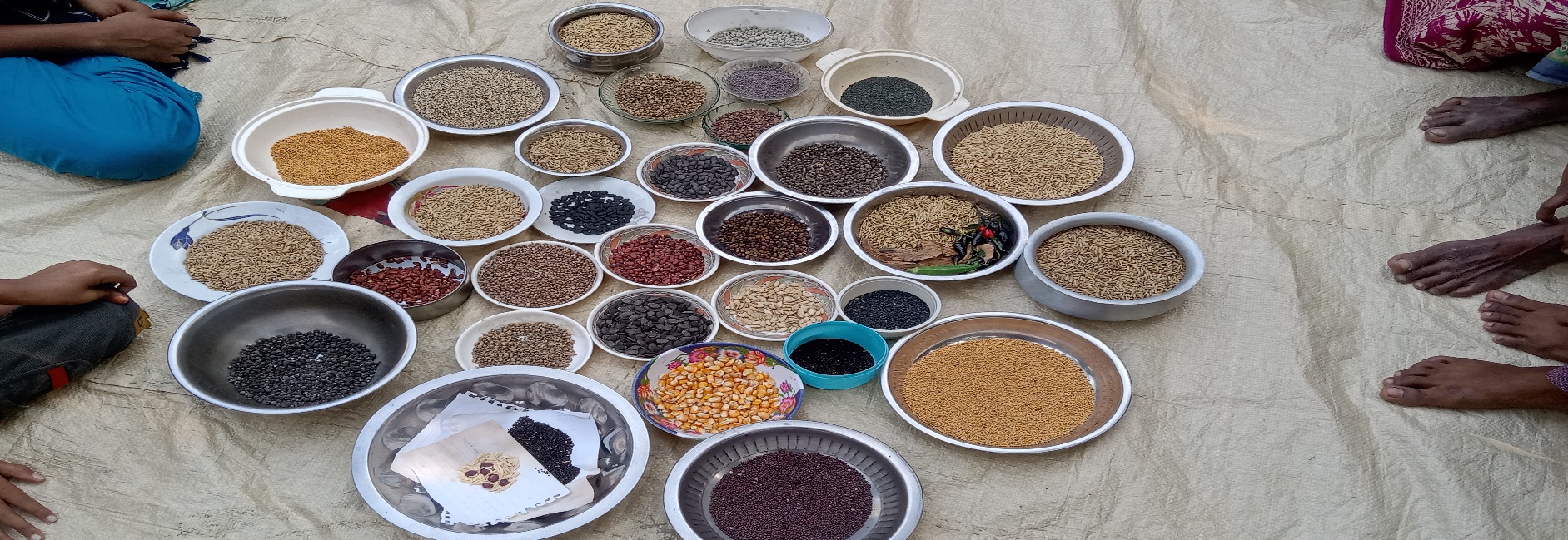
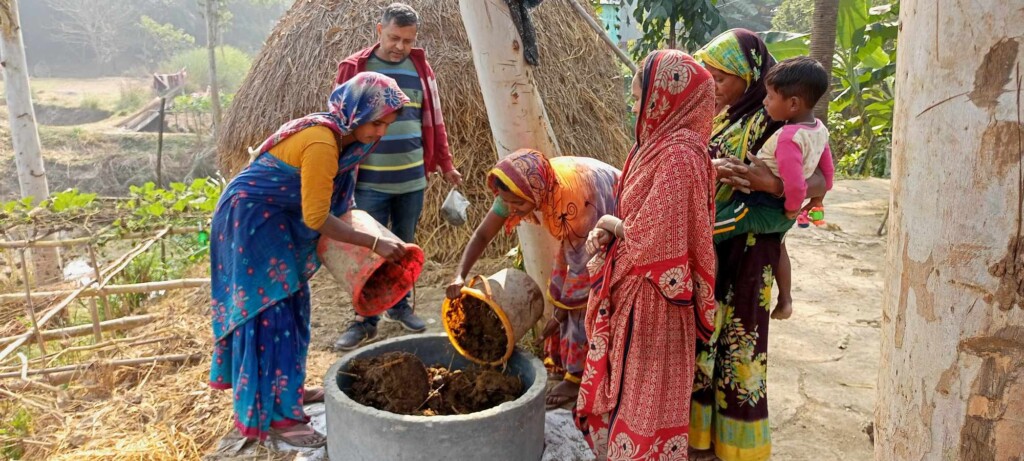
However, BARCIK has been working in Manikgonj for almost more than one decade focusing on protection of nature, environment and promotion and advancement of agroecology which explores indigenous knowledge based food production requiring no external toxic inputs and market seeds. BARCIK also works on strengthening farmers’ and women associations and capacity development to equip them with technique and understanding on nature based farming including recognizing their environment friendly practices and knowledge.
Nonetheless, BARCIK alone cannot make a substantial changes in the areas and this leads BARCIK to get connected and linked with other like-minded organizations and civil society to collaboratively advocate for ensuring farmer’s rights on agriculture by restoring the biodiversity and stopping degradation of environment and nature. BARCIK believes, the integration and collaboration will persuade the state actors taking effective measures to stop biodiversity depletion and environment pollution which will benefit the farmers who practice agroecology that fosters biodiversity restoration.
To be mentioned that the culture itself has the power to control these hazards and BARCIK recognizing this strengths does organize and facilitate gender sensitization, intergenerational dialogue, women empowerment, and promote pluralism to further reinforce and strengthen the local power and knowledge.