In the northeastern lowlands of Bangladesh, where seven districts dissolve into a vast bowl of water for half the year, roughly 20 million people live by the rhythm of two seasons: monsoon flood and dry-season drought. This is the haor region — some 423 wetland basins spanning about 8,000 square kilometers, one of the country’s most important food banks, and also one of the places where climate change is hitting hardest and fastest.

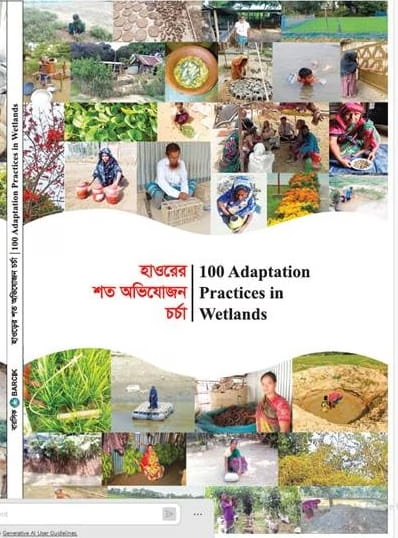
A new book from BARCIK (the Bangladesh Resource Centre for Indigenous Knowledge), coordinated by researcher Pavel Partha and published in March 2026, sets out to document something that rarely makes headlines: the everyday, hard-won climate adaptations that rural women in the haors have been quietly developing and passing on for generations. The book is simply titled 100 Adaptation Practices in Haor Wetlands, and that title is exactly the point — it’s a field-collected catalogue of one hundred real, local, working solutions.
A region built on water — and increasingly undone by it
The haor wetlands have always lived by extremes. During the monsoon, floodwater and mountain silt pour down from the Meghalaya hills across the border; by late autumn, the same land turns dry and cracked. The region once grew a rich diversity of deep-water rice varieties, and its wetlands historically supported some 260 recorded freshwater fish species. Bangladesh’s first deep-water rice research station was even established here, in Habiganj, back in 1934.
But that abundance is fraying. The book notes that dozens of fish species once common in the haors — Chital, Baghaire, Mahashol, Ghagla, and many others — have become locally extinct, and the natural buffers that once protected villages from flash floods and destructive wind-driven waves (locally called afal) have been eroded by development pressure and ecological disruption. Layer climate change on top of that — erratic rainfall, early flash floods, longer dry spells — and rural communities, especially women who manage households, kitchen gardens, seed stocks, and small livestock, are on the front line of figuring out how to cope.
That’s where this book comes in.
Not theory — testimony
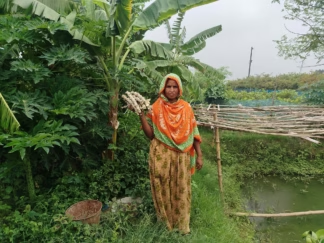
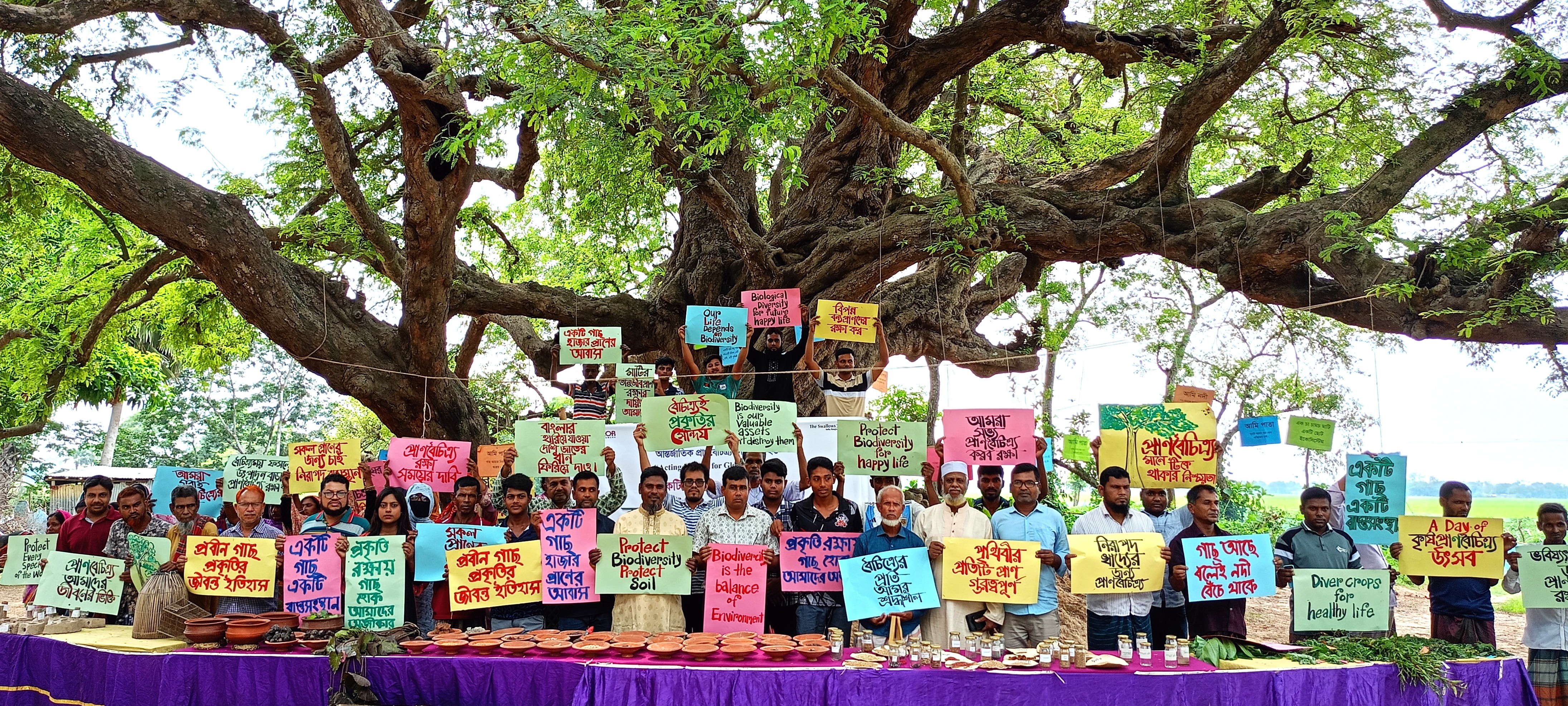
Rather than proposing solutions from the outside, BARCIK’s research team worked directly with women across five upazilas — Kalmakanda, Madan, Atpara, and Netrokona Sadar among them — through participatory field research. Each of the 100 entries in the book follows the same simple, respectful format: the name, age, and village of the woman who practices it, a description of the technique in her own community’s words, and a note on how far the practice has spread locally. It reads less like a technical manual and more like an oral archive — a record of ingenuity that has never needed a research grant to work.
A few examples give a sense of the range and cleverness on display:
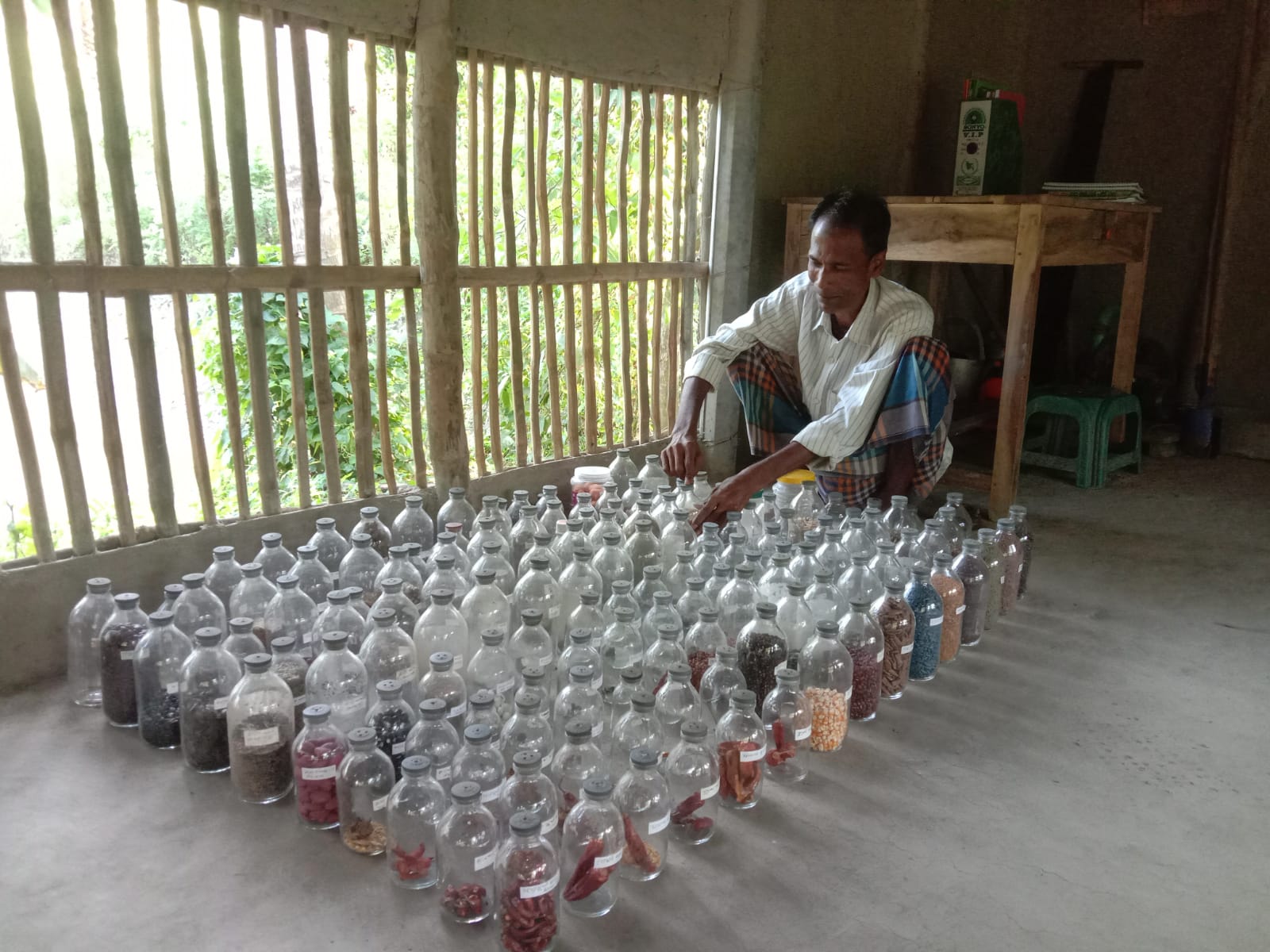
- Seed-saving without a fridge. To keep wax gourd seeds viable through heat and rain, women let the gourd fully mature on the vine, harvest it without bruising, and store it whole in a cool, dry spot — only extracting the seeds right before planting season, with no need for sun-drying at all.
- Outsmarting rats. Round potato seeds are notoriously easy for rats to raid in storage. The fix: dry the seeds, pack them in net bags, and hang the bags from the bamboo rafters, sealed at the top with the slippery dried sheath of a betel nut leaf. Rats simply can’t get a grip to climb in.
- Soap from a flowering tree. In late winter, roadside shimul (silk-cotton) trees drop their red and yellow blossoms by the roadside — free for the taking. Dried, burned, and crushed into a powder, the ash makes a natural cleaning agent strong enough for bedsheets and mosquito nets, without fading fabric colors.
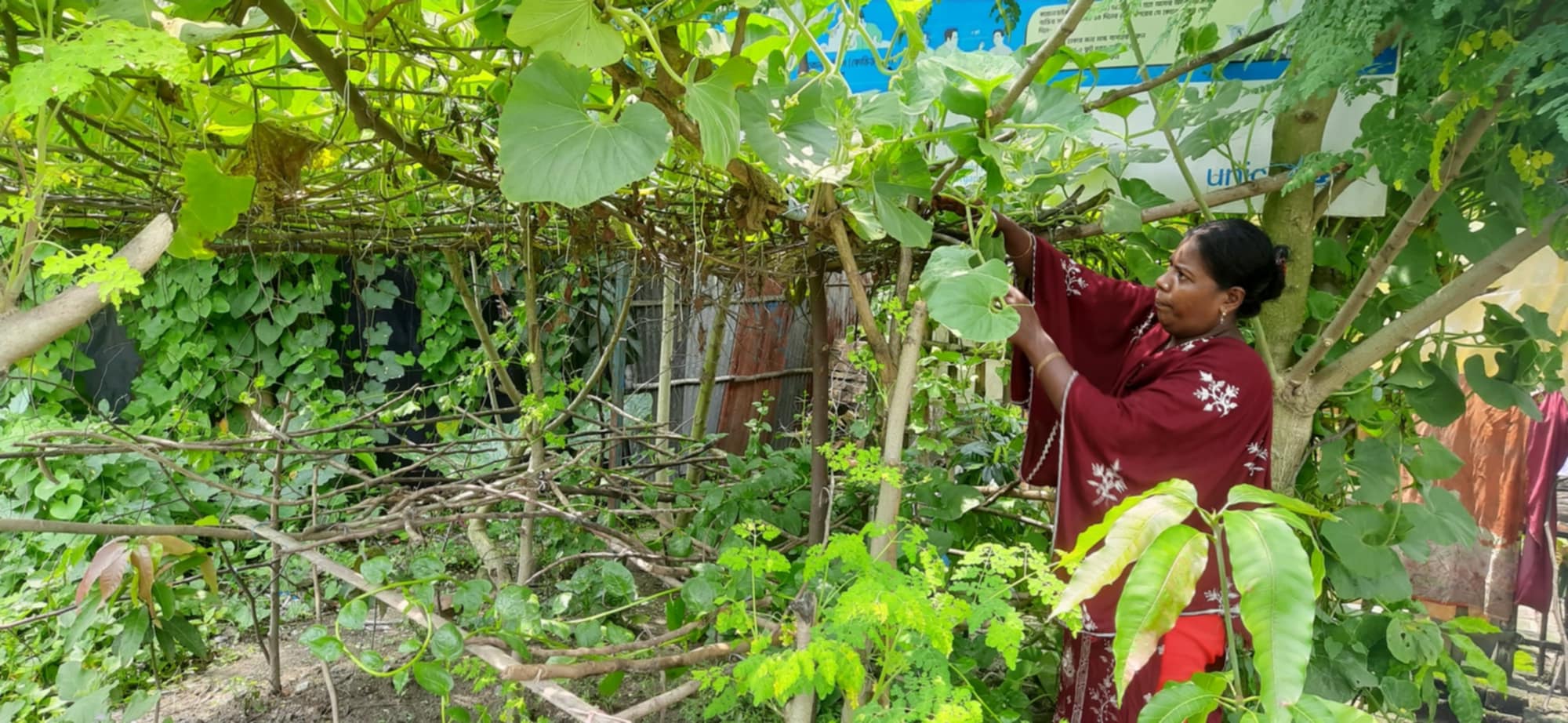
- Growing vegetables over water. Where farmland is scarce, families build bamboo lofts over the household pond and train vegetables to grow across the surface — doubling their growing space without giving up an inch of soil.
- Slow-drip irrigation with soil alone. In the dry months, farmers pack an earthen border around the base of trees so that water pools and seeps in gradually instead of running off — cutting the need for daily watering and keeping trees alive through the driest stretches.
- Preserving fish for the lean season. Fish are sun-dried, layered in earthen pots with heated and cooled fish oil, then buried underground for six months. The result — hidal, a fermented dried fish — becomes a vital, sellable food source during Chaitra and Baisakh, the traditional “hungry months” between harvests.
- Farming on water itself. Perhaps the book’s most striking closing entry: in villages submerged for six or seven months a year, women build floating beds from bamboo frames and layered water hyacinth, sow vegetables like red amaranth, kalmi, or radish directly into the decomposing plant matter, and let the whole bed rise and fall with the water level — settling onto the land as ready-made organic fertilizer once the flood recedes.
None of these require imported technology, external funding, or a single line of a project budget. They require observation, patience, and knowledge carried between generations of women who have never had the luxury of waiting for someone else to solve the problem.
Why a catalogue like this matters
It’s tempting to treat “indigenous knowledge” as a nostalgic footnote to real climate policy. This book argues the opposite: these are functioning, tested, community-verified adaptation strategies, and many of them are already spreading informally from household to household and village to village — the book tracks, for each entry, how many neighboring families have picked up the practice. That’s a bottom-up diffusion pattern that formal extension programs often struggle to replicate.
There’s also something pointed in how the book is funded going forward: proceeds from its sale are earmarked to directly support the agricultural adaptation work of the rural women documented inside it — a small but deliberate way of returning value to the people whose knowledge fills its pages.
At a moment when climate adaptation conversations tend to center on satellites, models, and multilateral funding mechanisms, 100 Adaptation Practices in Haor Wetlands is a useful corrective. It’s a reminder that some of the most resilient climate solutions aren’t waiting to be invented — they’re already being practiced, quietly, by women standing in floodwater up to their ankles, hanging potato seeds from bamboo rafters, and coaxing vegetables to grow across the surface of a pond.
100 Adaptation Practices in Haor Wetlands, coordinated and compiled by Pavel Partha, edited by Silvanus Lamin, published by BARCIK (Bangladesh Resource Centre for Indigenous Knowledge), March 2026.