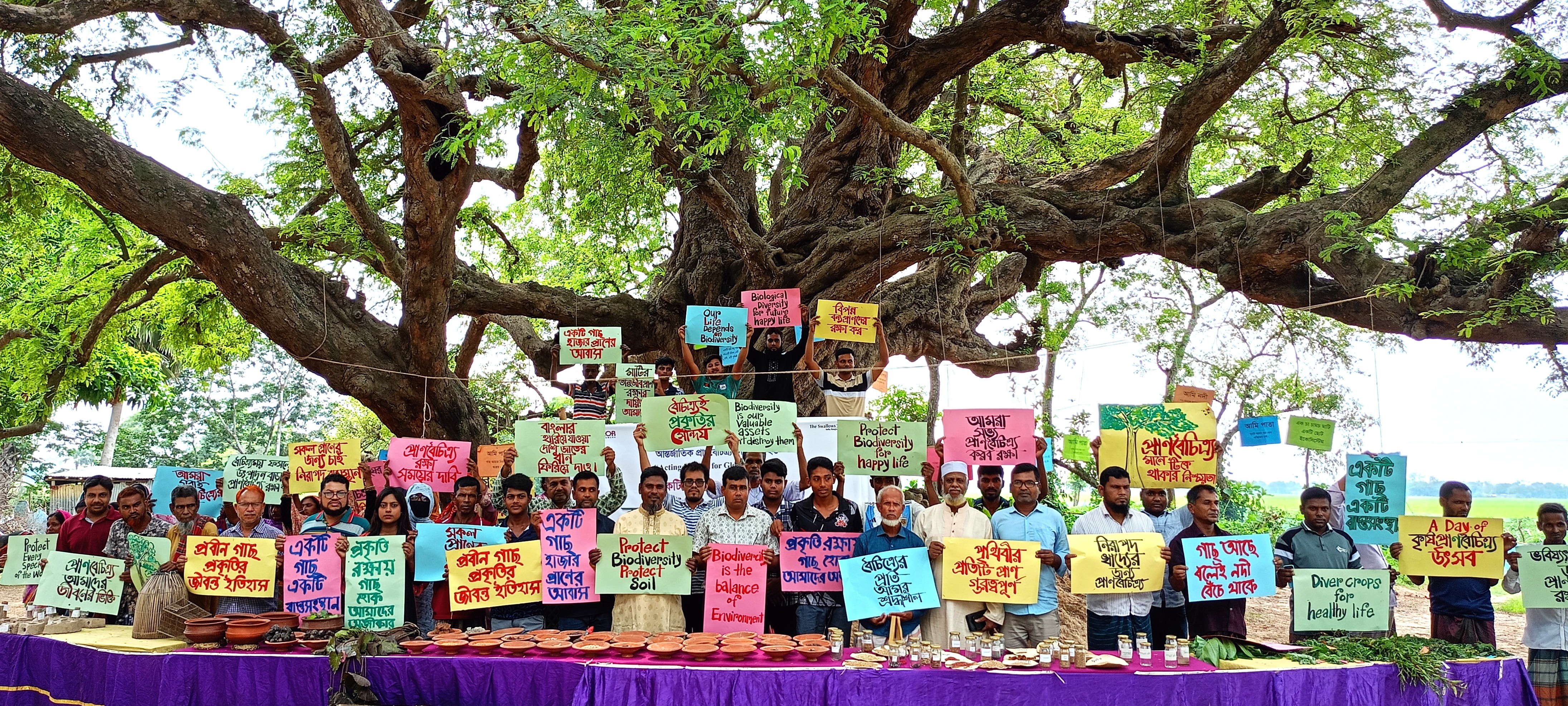
Barsha Gain, from Shymanagar, Satkhira
In Kamalakati village under Padmapukur Union in Shyamnagar Upazila of Satkhira, life is a continuous struggle against nature. This is a land where the soil tastes of salt, where rivers slowly eat away homes and fields, and where every season brings new uncertainty such as salinity, drought, cyclones, water scarcity, and river erosion. Yet, even here, people do not give up. They fight quietly day after day to protect their families and ensure food on the table.
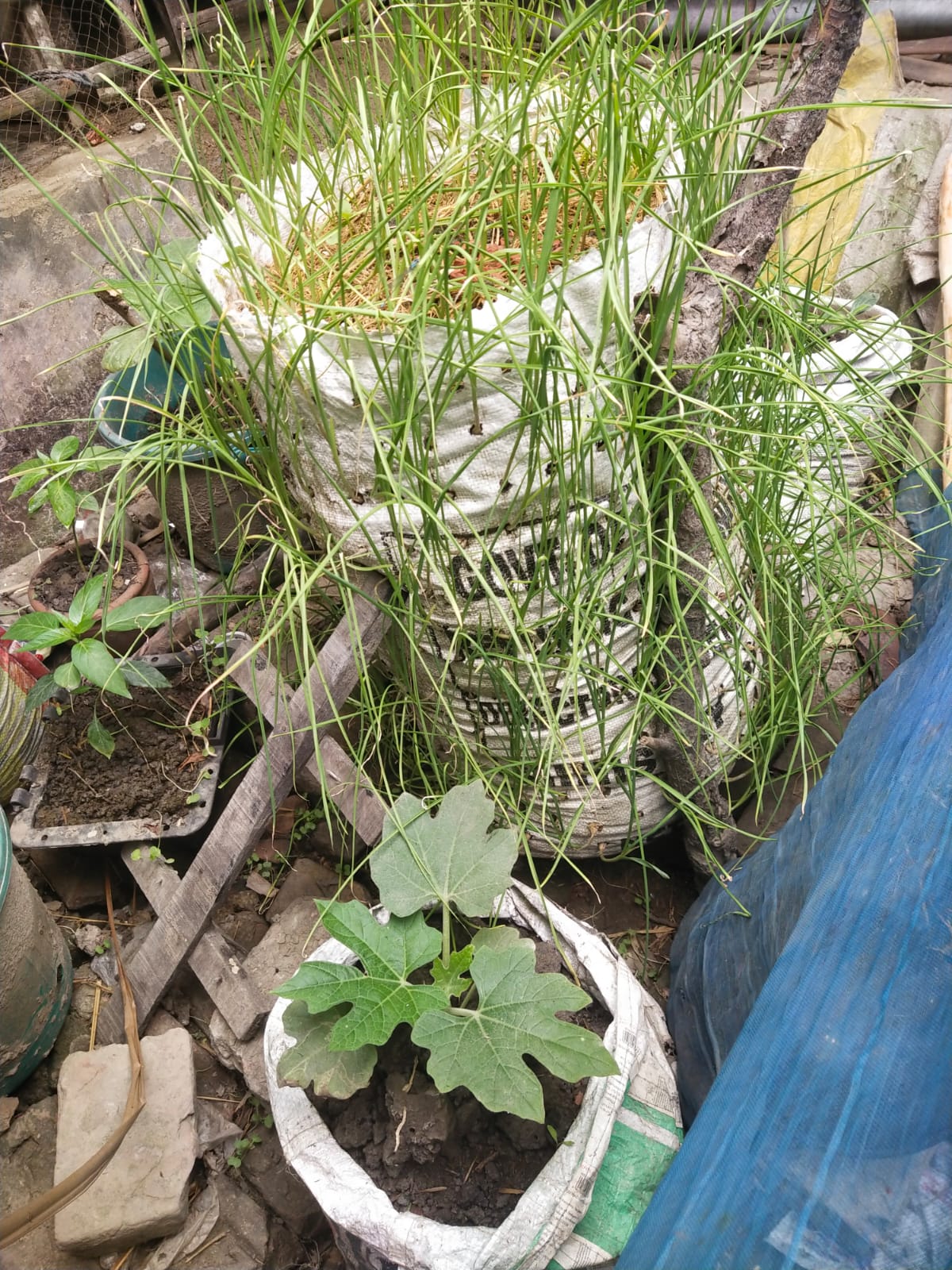
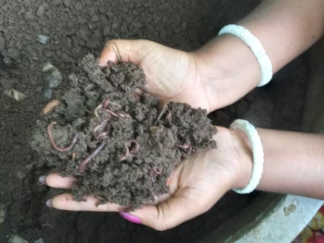
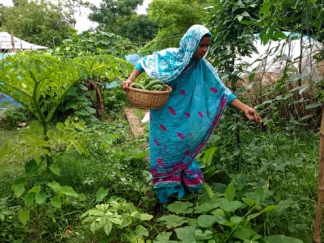
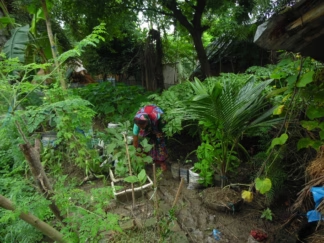
With shrinking land and rising climate pressure, farmers have turned to small but powerful innovations. They grow vegetables in sacks, use buckets, make tower gardens, create water-saving pits, practice mulching, and prepare compost from waste. These simple methods have become lifelines. With continuous support from BARCIK, they are learning how to turn local knowledge into survival strategies; how to farm even when the land is failing them.
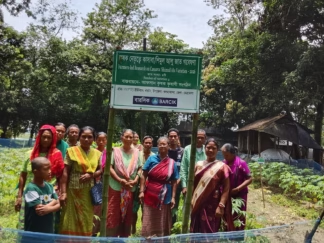
In November 2025, something special happened in Kamalakati. During a regular meeting of the agroecology group, farmers gathered to talk with hope. They discussed growing garlic in sacks something so simple, yet so powerful in a land where soil is disappearing.
That day, they didn’t just learn. They decided. They went home and started planting in every empty corner they had covering yards, rooftops, broken spaces. Farmers like Bikash Mondal, Shampa Rani, and Arafat didn’t keep the knowledge to themselves. They carried it like a shared responsibility, moving from house to house, encouraging others. And slowly, quietly, nearly 50 farmers joined in.
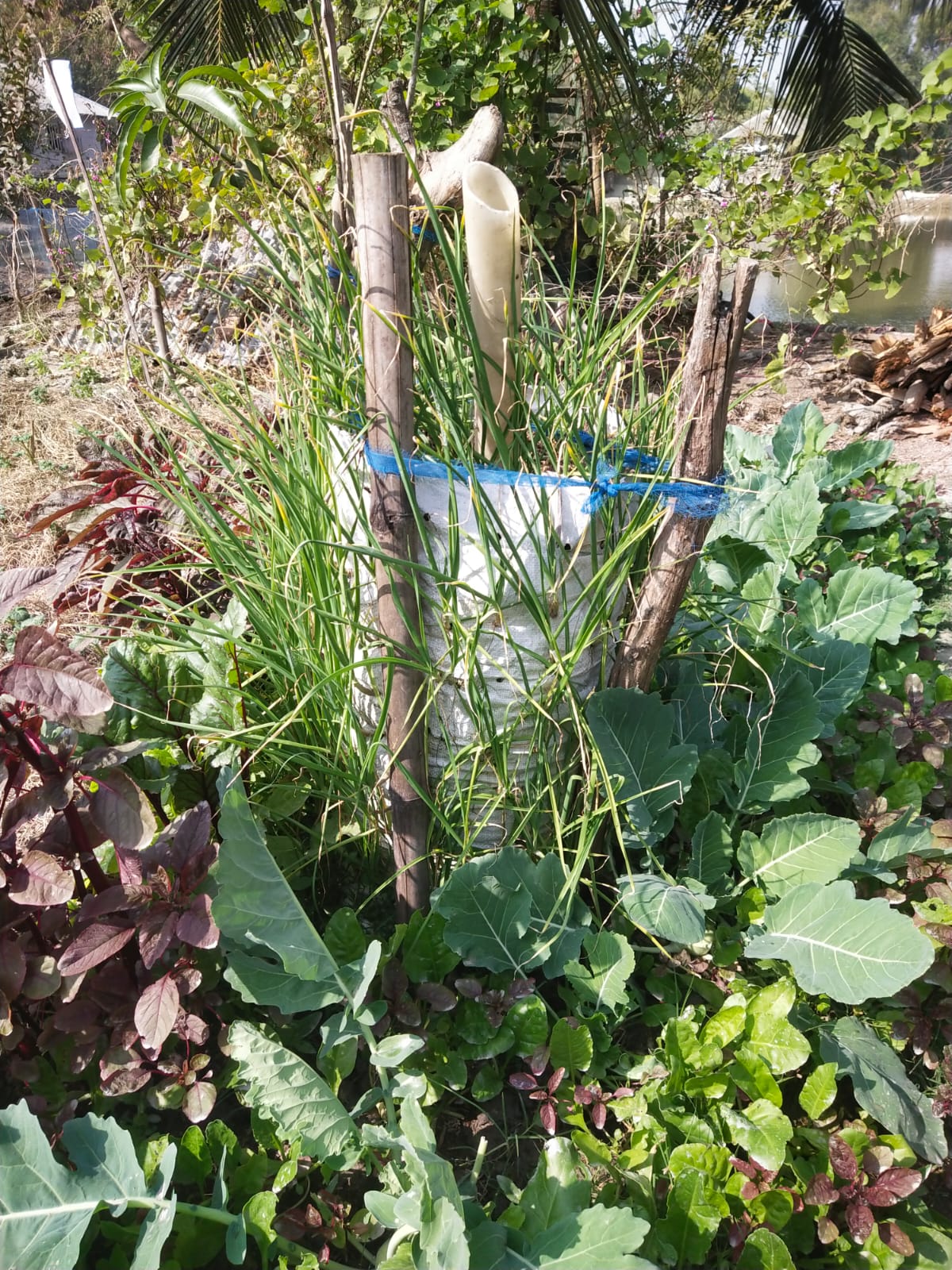
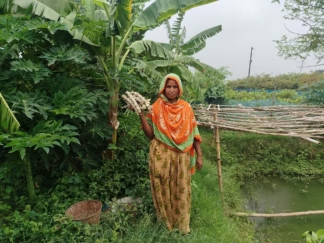
For Hannan Gazi, it meant everything. He has witnessed his land shrink year after year as the river takes pieces of his world away. “We don’t have land like before,” he said softly. “But we still want to grow something for our children.” When he saw garlic is growing in sacks, he felt hope for the first time in a long while. From each sack, he now harvests 3–4 kg of garlic, though small in size, but huge in meaning. Others like Raziya Begum, Anita Mondol, and Saheb Ali followed too. What started as an experiment became a movement of survival.
Agricultural officer Kartik Chandra observed that these small innovations carry deep meaning saying, “When farmers trust their own knowledge, change becomes real,”. He also acknowledged the growing role of government and organizations in supporting such community resilience.
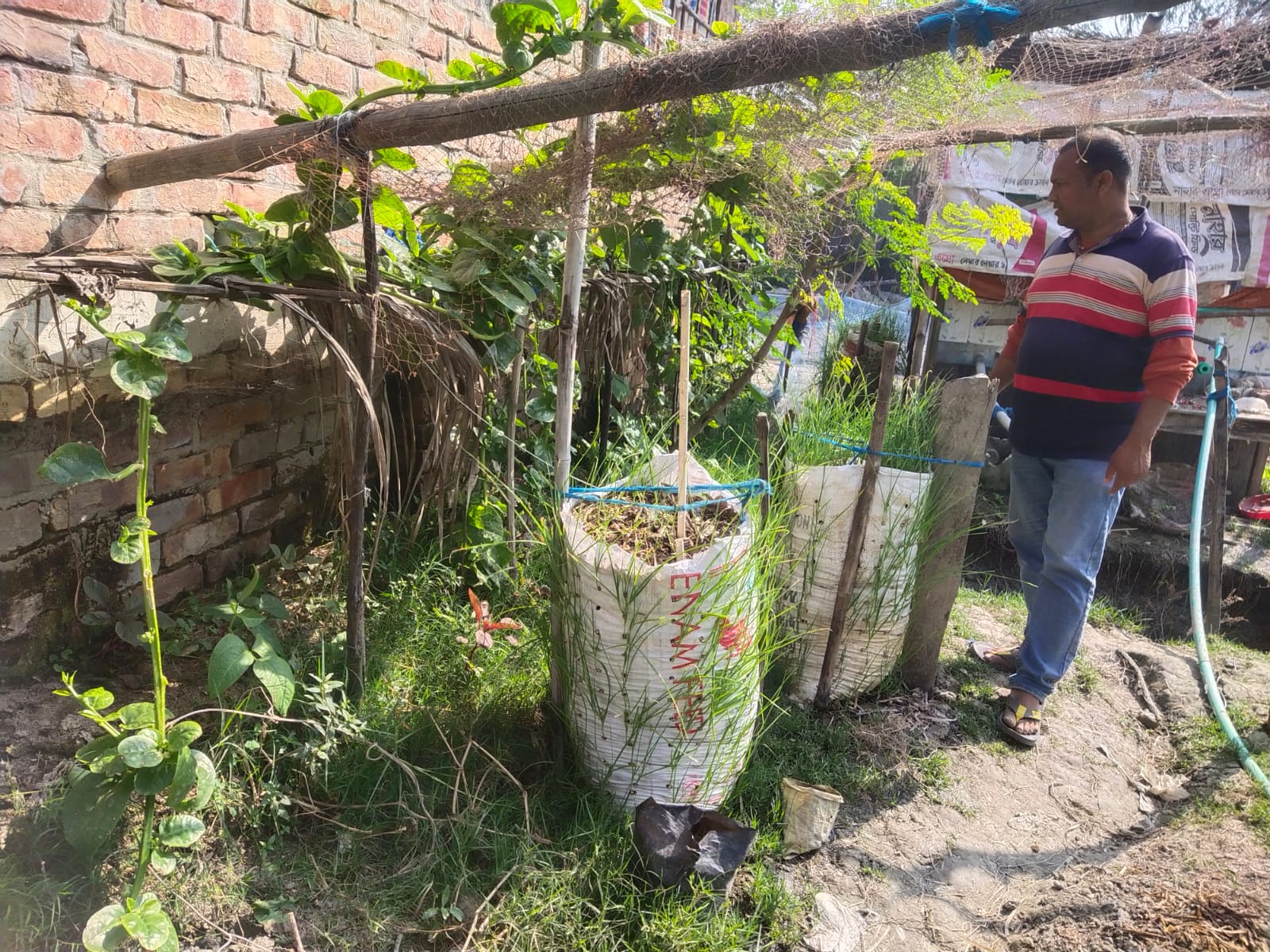
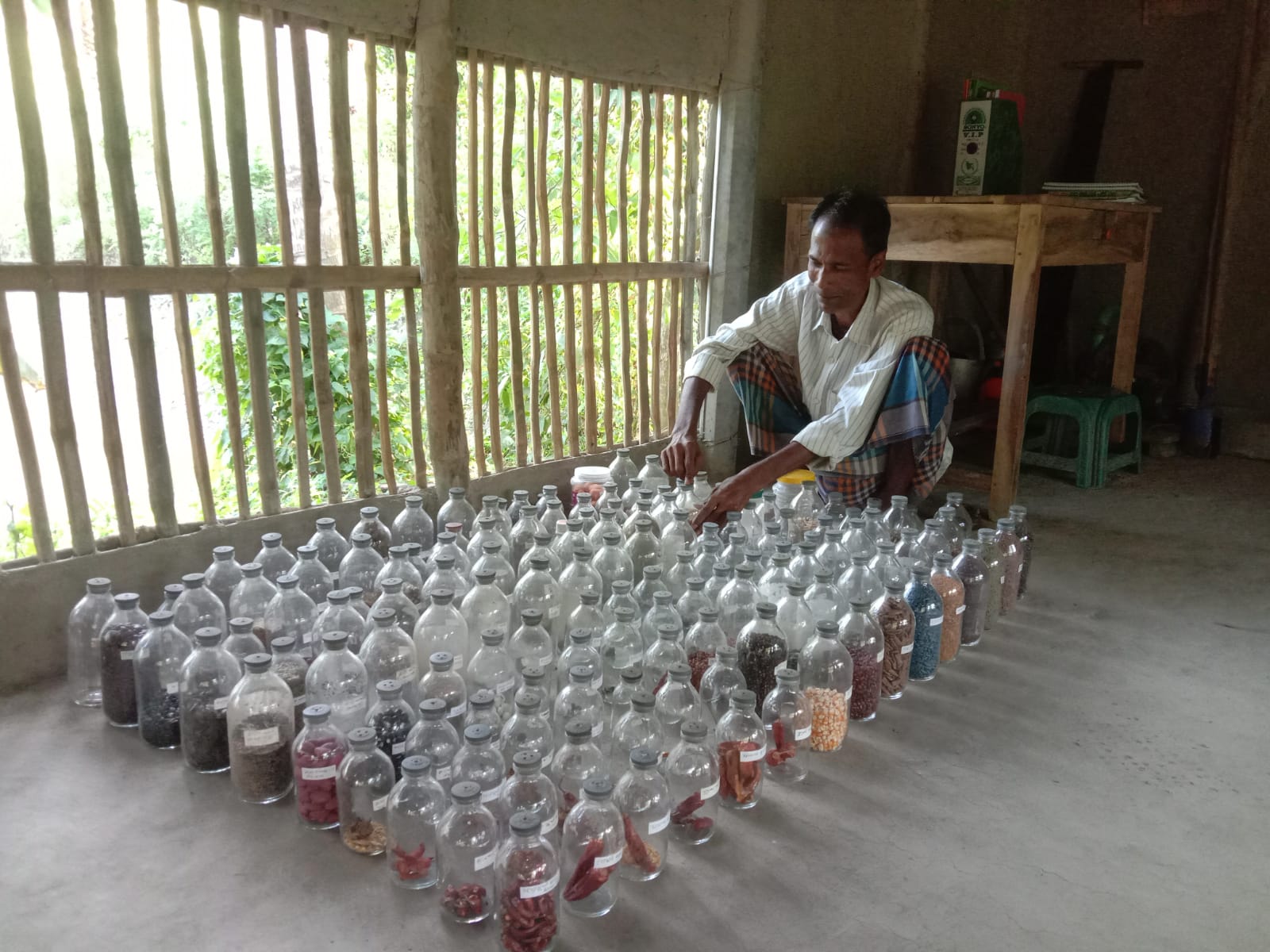
For Bikash Mondal, this journey is personal. He once lost everything after saving hybrid rice seeds, not knowing they could not be reused. That loss taught him pain, but also wisdom. Through training with BARCIK, he learned that true strength lies in local seeds, shared knowledge, and collective learning.
He now believes something deeply simple yet powerful: when farming depends only on chemicals and markets, farmers lose control of their lives. But when farming grows from their own hands, their own knowledge, and their own courage survive, even in the harshest land. In Kamalakati village farming is no longer just agriculture rather it is more than a resistance.