By Shahidul Islam Shahid from Rajshahi
In Bangladesh’s Barind region, women traditionally played an important role in collecting and conserving seeds, growing vegetables around their homes and exchanging seeds with neighbors. However, the increasing use of hybrid seeds, chemical fertilizers and pesticides has gradually weakened these traditional practices. Climate change, including irregular rainfall and drought, has further increased risks to farming and food security.
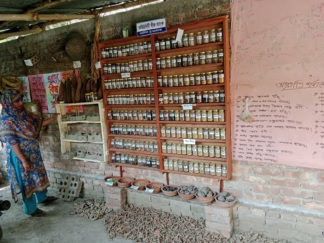
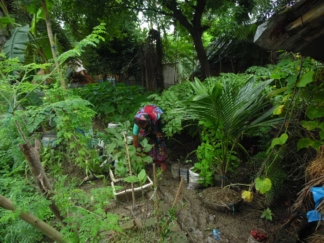
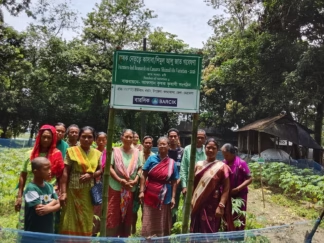
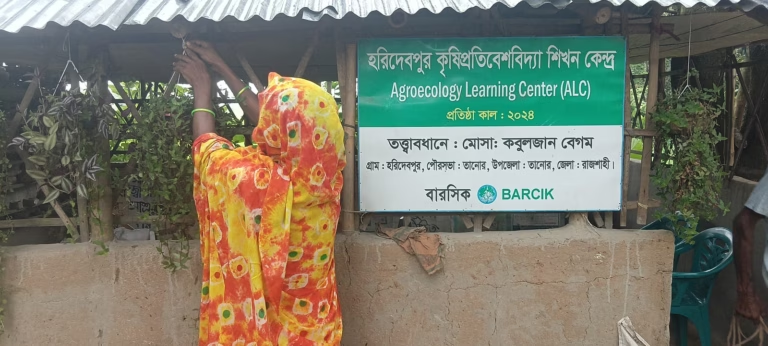
To help protect local seed diversity and food sovereignty, farmer Kabuljan has established an Agroecology Learning Centre at her home in Haridevpur village, Tanore, Rajshahi, with support from BARCIK. Farmers, women, students, traditional healers and people from different professions visit the centre to exchange seeds, plants and local knowledge and participate in practical learning.
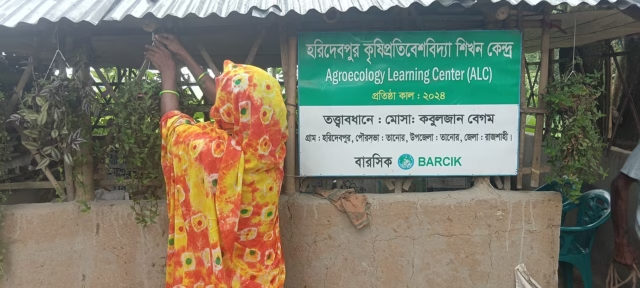
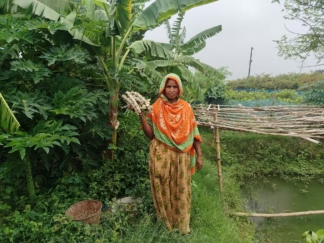
Kabuljan was married at the age of 14 in 1978 after completing only primary-level schooling. She learned to make traditional earthen stoves for her family and neighbours and gradually developed this skill into a wider community practice. Since joining BARCIK in 2014, her work has expanded significantly. In recognition of her contribution, she received the Joyita Award in 2016.
A centre for biodiversity and traditional knowledge
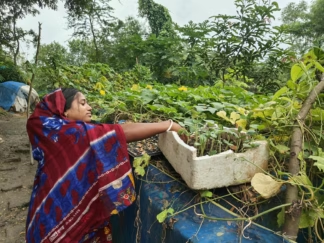
Kabuljan established the Haridevpur Women’s Organization in 2015, which now has 200 women members from different religious communities. The centre also preserves traditional practices such as using an old dheki to prepare rice flour and traditional foods. Local farmers and traditional healers collect medicinal plants from the garden when needed. The learning centre provides space for meetings, practical training on environment-friendly agriculture, climate adaptation and local knowledge. Participants also exchange and collect seeds, seedlings and medicinal plants.
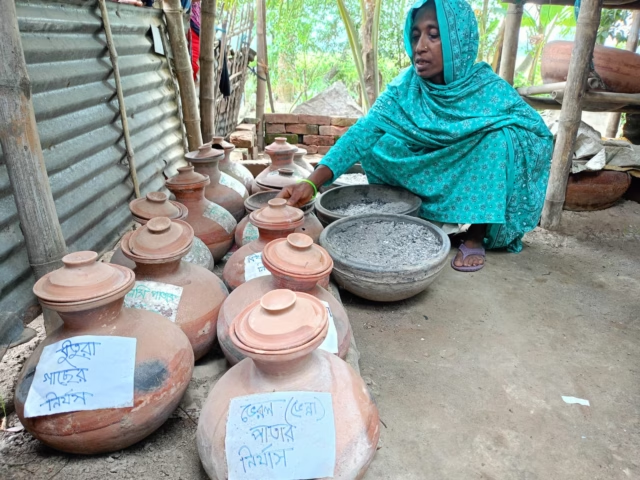
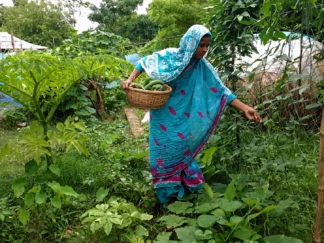
The centre currently contains 121 species of flowers, fruits, uncultivated plants, medicinal plants, vegetables and trees, while 140 local seed varieties are preserved. Kabuljan farms a total of 30 decimals of land, including 10 decimals of homestead land and 10 decimals of agricultural land, and leases another 100 decimals annually for diversified cultivation. She also raises cattle, goats, sheep, ducks and chickens, while bees, butterflies and other insects thrive in her gardens.
Promoting organic alternatives
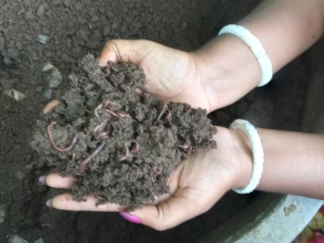
Instead of increasing dependence on chemical fertilizers and pesticides, Kabuljan produces vermicompost and natural pesticides. Her vermicompost has supported 40 farmers, while 15 farmers have received earthworms to establish their own production systems. She has also sold vermicompost worth BDT 1,500 and continues to produce it for further use and sale. She trains farmers to prepare and apply quick compost and botanical pesticides as alternatives to chemical inputs.
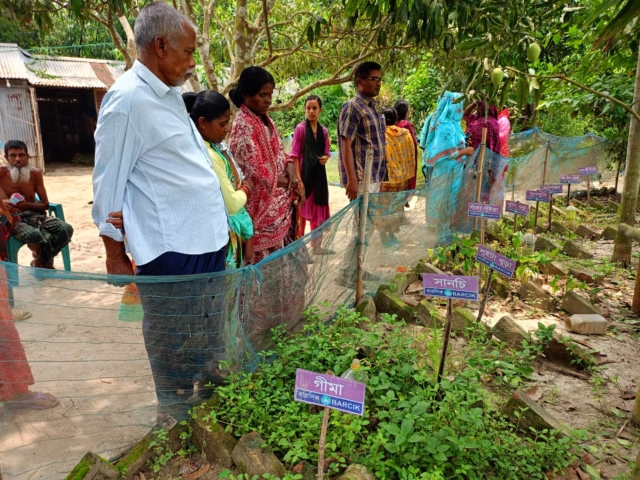
A community seed house
Kabuljan collects and preserves local seeds for her family and neighbouring farmers. Her seed house has enabled approximately 900 farmers, both women and men, from nearby and other areas to exchange and receive seeds. She grows local vegetables throughout the year, shares them with neighbors and encourages other women to preserve seeds and adopt organic practices.
Environment-friendly oven reach three districts
Kabuljan has made nearly 3,000 environment-friendly earthen stoves in 95 villages, nine upazilas and three districts. Tanore, Niamatpur, Mohadevpur, Manda, Mohanpur, Nachole, Godagari, Paba and Rajshahi city. She can make nine types of oven and also trains other women in stove-making. The stoves use less fuel, produce less smoke and soot, and are inexpensive because they are made from locally available soil. She has even developed a stove that can serve three to four families together in a limited space. Her techniques have spread through training sessions, agricultural and biodiversity fairs, and women trained by her. With support from the local administration, Haridevpur is now recognized as an environment-friendly stove village.
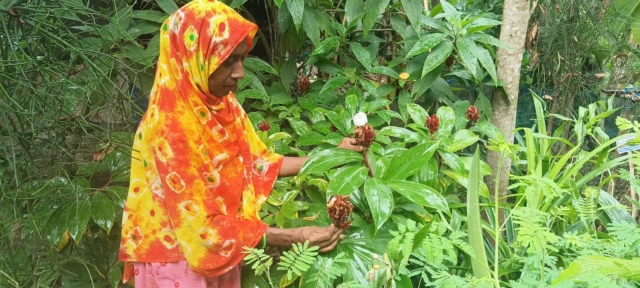
Kabuljan’s experience demonstrates how a small household initiative can contribute to biodiversity conservation, local knowledge, food sovereignty and environmentally friendly farming. Her Agroecology Learning Centre has become a practical space where farmers can learn, exchange knowledge and strengthen locally rooted agricultural practices.