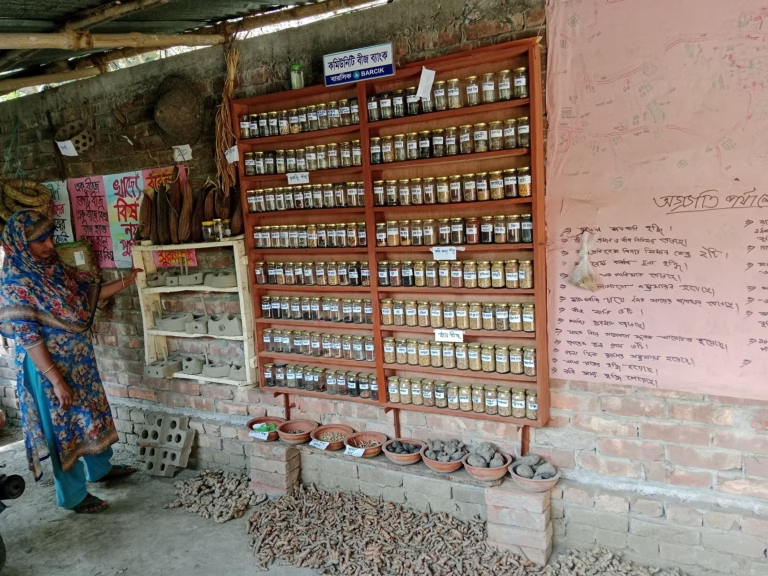
By Sultana Khatun from Paba, Rajshahi
Bil Nepalpara is a village in Darshanpara Union of Paba Upazila, Rajshahi, with around 350 households. Nearly 80% of the population is engaged in agriculture. BARCIK has been working with the community since 2016 to promote sustainable agriculture and strengthen local knowledge and practices.
Bil Nepalpara Agroecology Learning Centre
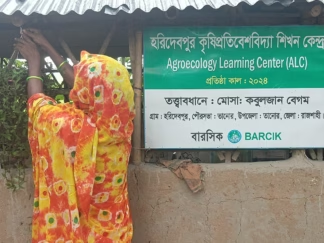
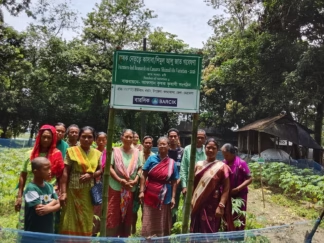
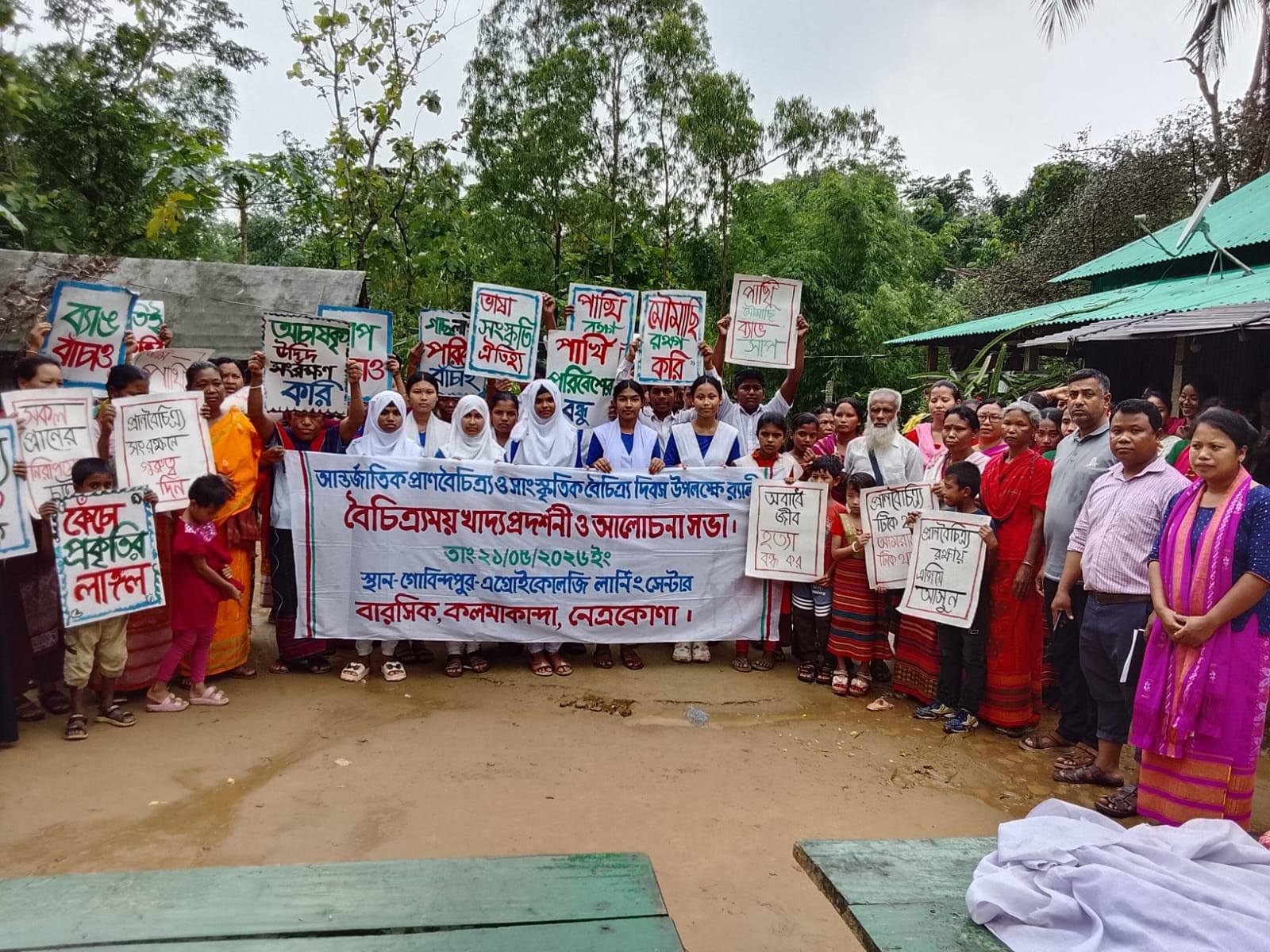
The Bil Nepalpara Agroecology Learning Centre (ALC) was established in 2024 by BARCIK and the Bil Nepalpara Women’s Organization in Ward 7 of Darshanpara Union. More than 3,000 women, men, farmers, youth and other community members are now connected with the centre. The ALC was established to promote environment friendly farming, food sovereignty, local seed conservation, climate adaptation, biodiversity protection and the use of indigenous knowledge. It provides a space where farmers, women, youth and older community members exchange knowledge and practices related to agroecology and climate justice.
Seed Conservation and Food Sovereignty
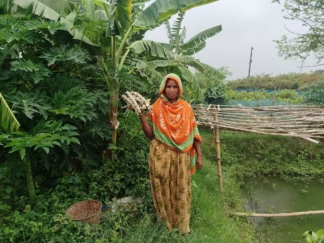
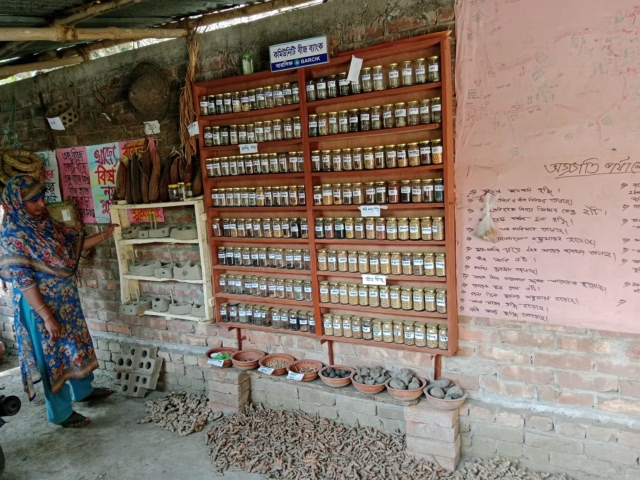
Seasonal seed conservation and exchange are among the ALC’s key activities. The seed bank, established in 2018, currently conserves 198 varieties of fruit, flower, vegetable, winter and medicinal seeds. Farmers produce and conserve most of these seeds themselves. Around 1,500 women and men from Darshanpara Union exchange seeds according to seasonal needs. Women farmers play a particularly important role in conserving and sharing local seeds, helping strengthen community seed sovereignty and food diversity.
Local Knowledge and Agroecological Practices
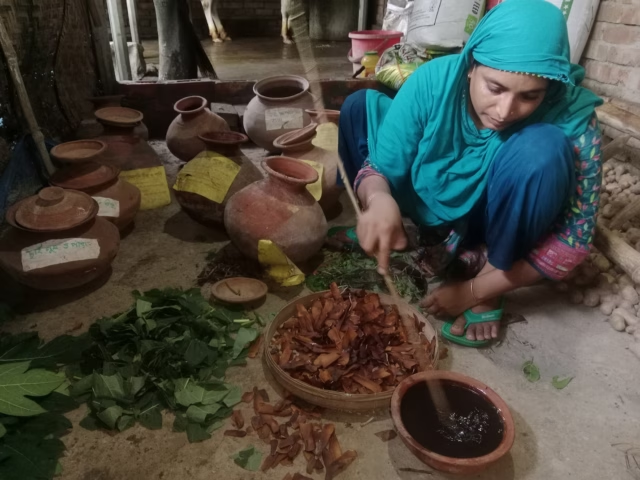
Farmers at the ALC use a range of locally developed and environment friendly practices, including: Botanical pesticides made from neem, nishinda, henna, mahogany, moringa and papaya leaves; Wood ash for pest control and soil improvement; Light and sticky traps to control harmful insects; Compost and manure made from livestock waste, dry leaves and household organic waste; Green manure crops such as dhaincha and legumes to improve soil fertility; Crop rotation to maintain soil health and reduce pests and diseases; Traditional seed storage using dried seeds, neem leaves or dried chilli in earthen pots, drums and other containers; Local indicators such as soil colour, texture and smell to identify suitable crops; Observation of wind, clouds, plant behaviour and insects to anticipate rainfall and drought.
Women, Youth and Climate Adaptation
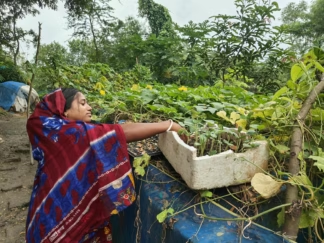
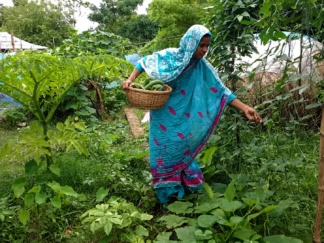
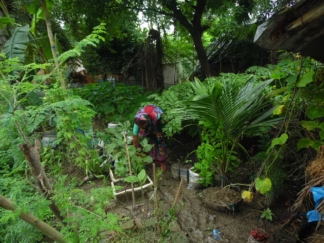
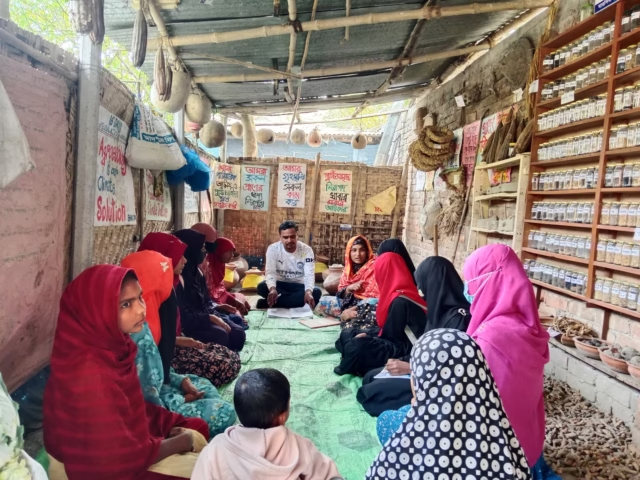
The ALC is largely women-led, with around 60 women regularly participating in its activities. Young people are also increasingly becoming interested in agriculture and experimenting with new practices alongside their studies. Climate change has increased the risks of drought, water scarcity, floods, cyclones and unpredictable weather in the area. In response, farmers are increasingly using local crop varieties, diversified farming and organic inputs. Since the ALC was established, training has promoted climate-adaptive practices such as sack and crate gardening, reuse of plastic containers, two-tier trellises and spice cultivation in shaded spaces. These approaches have enabled many households to produce safer vegetables in small spaces.
Changes in Farming Practices
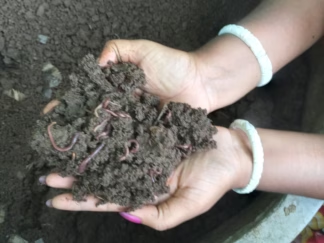
The ALC has contributed to increased seed conservation and exchange, production and use of botanical pesticides, vermicompost and other organic fertilizers, and seasonal vegetable cultivation. Beyond farming, it has strengthened women’s leadership, confidence and awareness of safe food and seed conservation. Ayesha Begum from Dighipara village is one example. Previously, she used chemical fertilizers and pesticides to grow vegetables. After learning through the Bil Nepalpara ALC, she began using environmentally friendly practices at home and encouraging others to do the same.
Challenges
Farmers often remain accustomed to chemical fertilizers and pesticides because they provide quick results, making them hesitant to adopt longer-term agroecological practices. Limited technical expertise among local trainers, lack of dedicated markets and fair prices for agroecological products, and the spread of commercial hybrid seeds are additional challenges. The continued loss of local seed varieties is a particular concern. Strengthening ALCs therefore, requires a combination of local knowledge, scientific approaches, technical capacity, and coordinated support from government and non-government institutions.
Conclusion
The Bil Nepalpara ALC has increased community awareness and created opportunities for seed and knowledge exchange. It is emerging as a local platform for promoting agroecology, climate adaptation, food sovereignty, biodiversity conservation and women’s leadership. With continued community participation and institutional support, the centre has the potential to become a model for sustainable agriculture and community-led environmental and social development in Darshanpara Union.