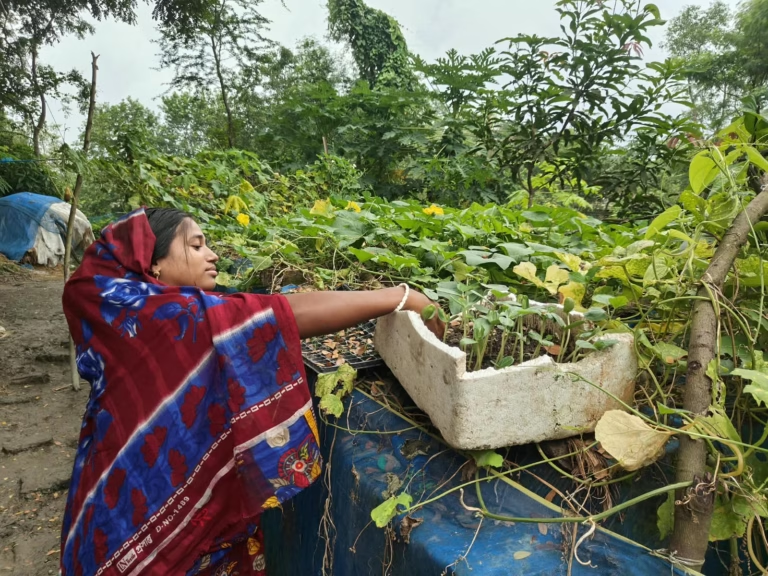
By Mofijur Rahman, from Satkhira
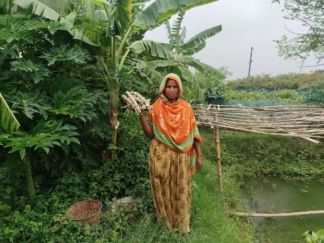
Seema Rani, a farmer from Kadamtala village in Burigoalini Union, Shyamnagar, Satkhira, manages a six-member household while working with her husband, Mithun Mondal, in agriculture. Their homestead covers 33 decimals, with 15 decimals of farmland. They also lease 12 bighas of land for fish farming and use the pond embankments for vegetable cultivation.
Salinity is a persistent challenge in Kadamtala. Saltwater and saline soils make crop production difficult. Despite these conditions, Seema has turned her homestead into an important source of food, nutrition and income.
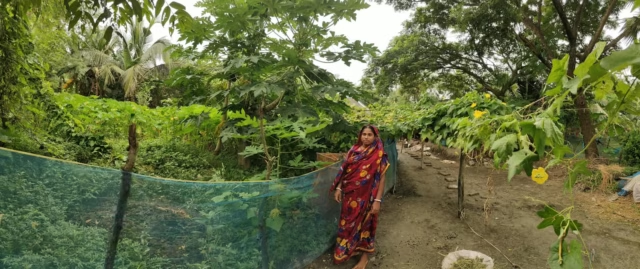
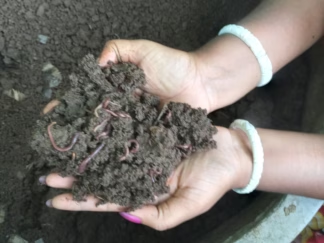
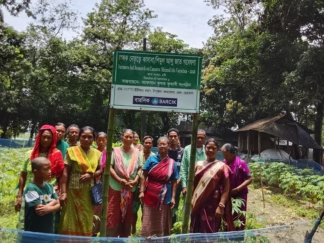
Previously, she depended heavily on market-purchased chemical fertilizers and pesticides and grew only a limited range of vegetables. After becoming involved with BARCIK, she received training on organic fertilizers, biopesticides, vermicompost and seed conservation. She began applying these practices at home and gradually reduced her dependence on external agricultural inputs.
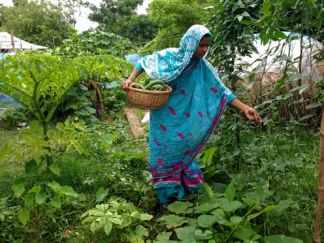
Today, her homestead and fish-pond embankments support a diverse range of crops. During the monsoon, pumpkin is particularly important. This year she has around 2,500 pumpkin plants and plans to harvest in three rounds. In the first round, she sold 35 maunds at Tk 1,000 per maund. She expects to sell around 100 maunds in total, potentially earning about Tk 100,000 at the same price.
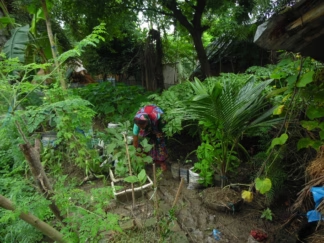
Her production extends far beyond pumpkins. Throughout the year she cultivates okra, Malabar spinach, yam, cucumber, chilli, taro, eggplant, red amaranth, stem amaranth, onion, garlic, tomato, fennel, honey mango, sponge gourd, ridge gourd, water spinach, bottle gourd, beans and moringa. Her homestead also contains mango, sapodilla, wax apple, banana, jamun, guava, palmyra, babla, neem, silk cotton, areca nut and almond trees. Fish and poultry are also integrated into the system, allowing different components of the farm to support one another.
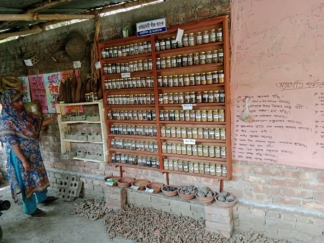
Seema also collects and conserves seeds from her crops. After meeting her family’s needs, she shares seeds with others. She says that having home-produced vegetables has improved her family’s diet and reduced the need to purchase vegetables from the market.
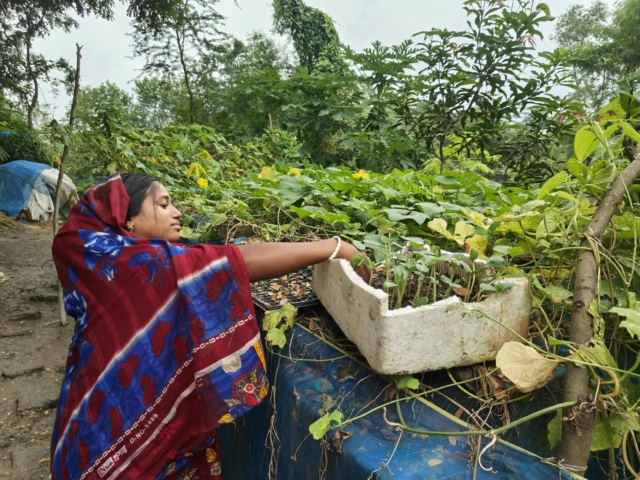
Her homestead has also become a local space for learning and seed exchange. Neighbours consult her about vegetable cultivation and seed conservation, and she shares both seeds and produce with others. However, salinity and dependence on seasonal production remain significant risks, making crop diversity essential.
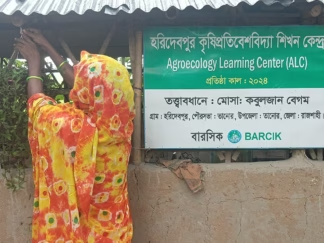
Seema’s experience demonstrates how small plots, pond embankments, family labour and local knowledge can be combined to create a diverse agroecological system in a saline coastal environment. Her homestead now serves as a source of food and income and as a space for seed conservation, knowledge sharing and community cooperation.