By Amit Sarker from Rajshahi
Before dawn, a woman leaves a slum on the edge of a city. She may spend the day cooking and cleaning in someone else’s home, working as a domestic helper, or running a small roadside shop. A rickshaw puller carries passengers across the city. A construction worker builds new buildings; a waste worker collects what others throw away. Hotel workers, street vendors and day laborers keep the city’s economy moving. At the end of the day, however, many return to an informal settlement where even their own homes may not be safe.
These people keep cities functioning, yet their housing, safety and citizenship rights often receive the least attention in urban planning. This is the central question raised by World Habitat Day 2026: Where is the safe and dignified housing for these people?
Whose labor keeps cities alive?
World Habitat Day is observed on the first Monday of October. The United Nations designated it in 1985, and it was first observed in Nairobi, Kenya, in 1986 under the theme “Shelter is My Right.” Forty years later, that question remains deeply relevant: Who are cities built for?
Housing means more than a roof
The global theme for World Habitat Day 2026 is “Adequate Housing for All.” In Bangladesh, the Ministry of Housing and Public Works has adopted the theme “Universal Housing, Sustainable Urbanization.” The message is clear: housing cannot simply mean putting a roof over someone’s head. Adequate housing also means safety, clean water, sanitation, a healthy environment, access to livelihoods and essential services, and freedom from the constant fear of eviction. A family may have a room, but if it can be demolished at any time, lacks safe drinking water and sanitation, becomes unbearably hot during heatwaves, or is flooded during heavy rain, can that really be called secure housing? For low-income and slum-dwelling communities, therefore, housing must be understood as a right, not merely a welfare benefit. They are citizens and should have a meaningful role in decisions about the cities where they live and work.
Climate displacement is changing urban life
Bangladesh’s rapid urbanization is adding pressure to housing and basic services. According to the World Bank’s Country Climate and Development Report for Bangladesh, around 13.3 million people could become internal climate migrants by 2050, driven by climate-related pressures including agricultural losses, water scarcity and sea-level rise. River erosion, floods, cyclones, tidal surges, salinity, drought and declining agricultural productivity are already forcing many people to leave their homes and livelihoods. Some eventually move to cities in search of work, income, education, healthcare and security. But planned housing does not await everyone who arrives. Many end up in slums, informal settlements or insecure rental housing.
Namovodra: A Story beyond one slum
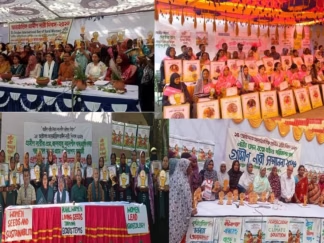
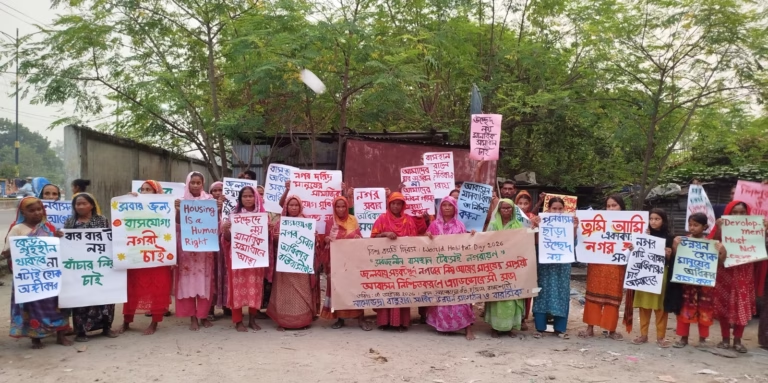
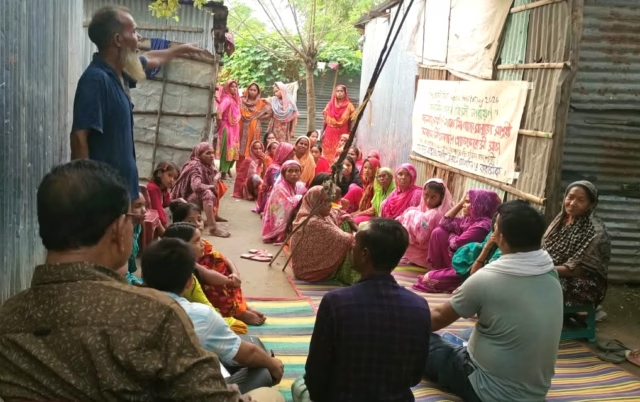
A policy dialogue held at Namovodra lakeside in Rajshahi on World Habitat Day brought this reality into sharp focus. Bachchu Mia, president of Bhadra Lakeside Slum Dwellers and Bhadra Homeless Comprehensive Development Organization, said, “We came here after losing our houses to river erosion. We collect discarded bottles, polythene and waste from the city. We help to keep the city clean, but we have no secure place to live.” Nilufa Begum described another dimension of the crisis saying “We vote here. If we do not work in people’s homes or cook their food, many of you could not eat. Yet we constantly live with the fear that our homes may be demolished.” Their words reveal a striking contradiction. The person who cleans the city may have no secure home. The woman who keeps another family’s home clean may live in constant uncertainty herself.
Are slum dwellers a burden or part of the city?
Look closely at any city and the answer becomes obvious. Rickshaw pullers are part of the transport system. Domestic workers sustain the care economy. Waste workers protect public health. Construction workers build roads, homes and infrastructure. Street vendors, hotel workers, small traders and day laborers keep goods and services moving. A large proportion of people living in informal settlements are engaged in the informal economy. To see slums simply as places where “poor people live” is therefore to overlook their vital contribution to urban life.
They keep the city running every day.
In the Barind region, including Rajshahi, prolonged drought, heatwaves, irregular rainfall and water scarcity create additional challenges. Urban poor communities face these pressures while often lacking adequate drainage, green spaces, open areas and climate-resilient infrastructure. Urban housing plans therefore, need to ask more than how many houses will be built. Are houses designed to withstand extreme heat? Where will water come from? Where will rainwater go? How will waste be managed? Where can residents find relief during heatwaves? Will there be green and open spaces? Most importantly, will people live without the fear of eviction? Without answers to these questions, climate-resilient housing remains incomplete.
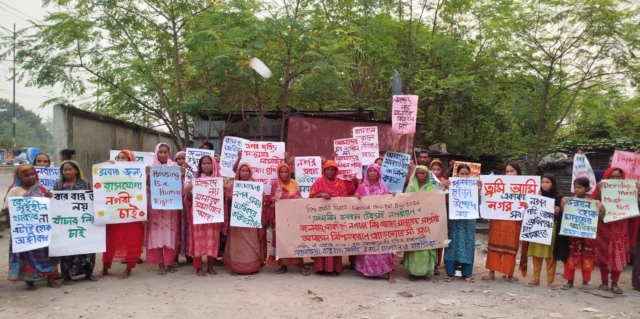
“No Eviction, We Want Solutions”
At the Namovodra dialogue, urban poor presented nine demands, including: safe housing instead of eviction; rehabilitation before any eviction; affordable, climate-resilient housing; safe water, electricity, sanitation and drainage; accessible healthcare; safe environments for women, children, older people and persons with disabilities; equal access to social protection; participation of low-income communities in urban planning; and livelihood and skills-development opportunities. These are not merely demands of urban poor in the slums. They are fundamental conditions for a livable, inclusive and sustainable city.
Who is the city for?
A city cannot be called sustainable if some people live in secure houses while others face eviction, unsafe housing, water shortages and unhealthy environments. Urban development cannot be measured only by high-rise buildings, wider roads and new infrastructure. A truly sustainable city is one where people can live safely, work with dignity, educate their children, access healthcare and plan for the future. Removing poor people from cities does not solve urban problems. Instead, cities need affordable, safe and climate-resilient housing, basic services and meaningful participation for low-income communities. After all, a city cannot be sustainable if it excludes the very people who keep it running.