By Md. Shahidul Islam, from Rajshahi
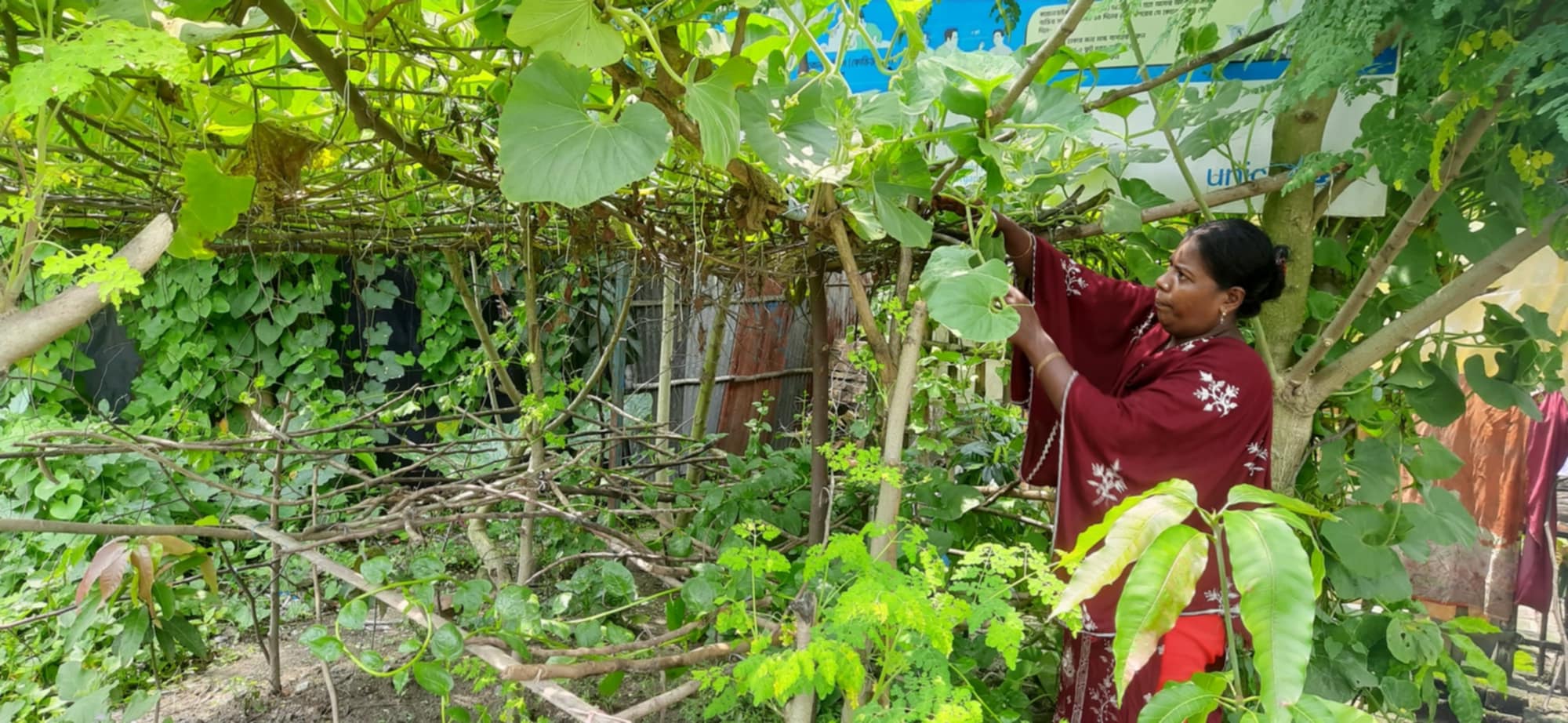
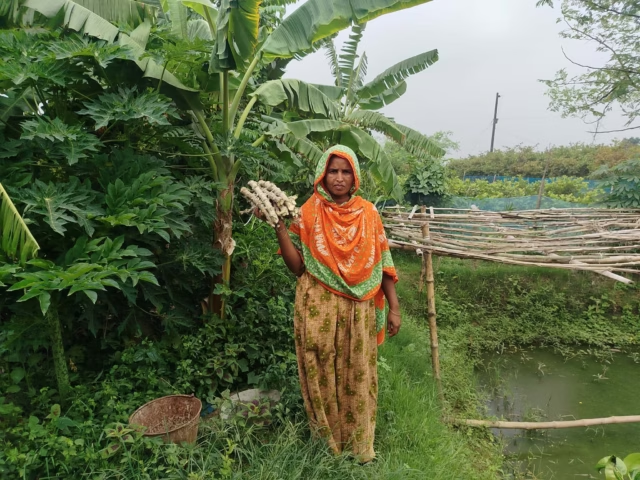
It is a monsoon morning. After a night of steady rain, we make our way along narrow streams of water tracing the red soil of the Barind region towards Kharibona village in Nachole Upazila of Chapainawabganj. For those who know the Barind only as Bangladesh’s drought-stricken landscape of water scarcity and parched fields, the scene is unexpectedly refreshing. At the entrance to the village, lush greenery stretches across almost every homestead. Indigenous bean vines climb bamboo trellises, papaya trees stand beside cassava plants, while drumstick trees, local chili varieties, and neatly arranged containers of seeds drying for the next planting season reflect a thriving farming culture. In one courtyard, women farmers prepare vermicompost; in another, large drums hold organic pesticides made from neem leaves, mahogany fruits, cow urine, and locally available medicinal plants. Indigenous chickens roam freely around the homesteads. These are not isolated activities; they are interconnected elements of a vibrant agroecosystem.
In June 2026, I spent three days with farmers in the villages of Kharibona, Nurpur, Golabari, Belpukur, Paikra, and Kasba in Nachole Upazila. The purpose was not to evaluate a development project, but to observe how farmers are putting agroecology into practice and to understand how communities living in one of Bangladesh’s most climate-vulnerable, drought-prone regions are building an alternative farming system by drawing on their own knowledge, experience, and local resources. Those three days reshaped my understanding of agricultural transformation. I did not witness a package of ready-made technologies; instead, I saw a long-term social process unfolding. I witnessed agriculture being rebuilt around farmers’ knowledge, the revival of indigenous seeds, women laying the foundations of food sovereignty, and communities reclaiming their rights over natural resources. Above all, I saw farmers themselves leading the process of change. Throughout my visit, one name surfaced repeatedly that of farmer-researcher Md. Raihan Kabir Ranju from Gaibandha. Yet it quickly became clear that this was not the story of a single individual. Rather, it is the collective story of hundreds of farmers, where one farmer-researcher helped initiate a process that local communities have since embraced and transformed into their own movement.
From the Reality of Drought to Finding an Alternative Path
The Barind region has long been recognized as one of Bangladesh’s most drought-prone agricultural zones. Irregular rainfall, rising temperatures, declining groundwater levels, and deteriorating soil organic matter have made farming increasingly uncertain. Climate change has only intensified these challenges. Local farmers explained that the seasonal patterns they once relied upon have become unpredictable. The timing of rainfall, seedbed preparation, and transplanting has all changed. At the same time, market-oriented agriculture has increased farmers’ dependence on high-yielding and hybrid seed varieties, leading to the gradual disappearance of many indigenous drought-tolerant crops. Reliance on chemical fertilizers and pesticides has continued to grow. Although production costs have increased, farming has become no less risky. Conversations with elderly farmers in Kharibona repeatedly returned to memories of lost seeds. They recalled a time when every household conserved its own seeds. One family would conserve a particular rice variety, another would protect local beans or chilies, while seasonal seed exchange strengthened social bonds within the community. As this tradition disappeared, farmers lost valuable seeds and their independence in making decisions about their own agriculture.
It was in this context that farmer-researcher Raihan Kabir Ranju began working in Kharibona village in 2013. Rather than introducing new technologies, he started by asking farmers simple but profound questions: Which seed varieties have disappeared? Which ones still survive in someone’s household? Which rice varieties tolerated drought? Which beans tasted better? Which rice straw was most suitable for livestock? These conversations became the foundation for a farmer-led research process.
The Farmers’ Field as the Research room
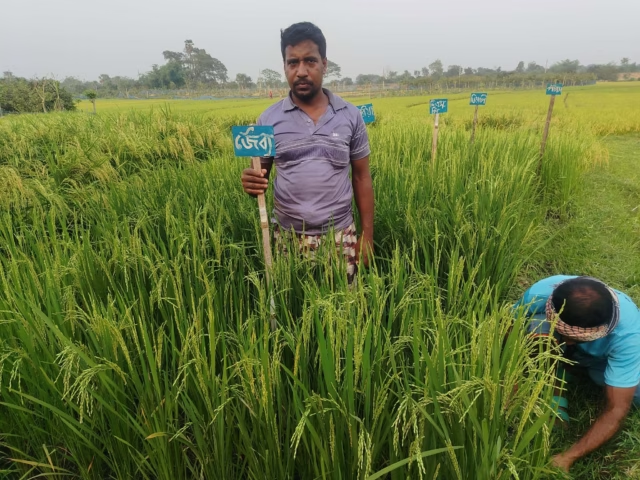
Perhaps the most remarkable aspect of Ranju’s work is that he shifted research from formal laboratories to farmers’ own fields. Indigenous rice, bean, chili, eggplant, spice, and vegetable seeds collected from different parts of the country were distributed among local farmers. Each farmer cultivated one or two varieties on a trial basis, and at the end of the season they gathered to evaluate the results together. Which varieties survived drought? Which suffered fewer pest attacks? Which tasted better? Which were preferred by families? Farmers themselves answered these questions through observation and experience. This approach represents a genuine example of farmer-led participatory research. Here, farmers are not passive recipients of technology; they are researchers, innovators, and decision-makers. Over the past decade, nearly thirty indigenous rice varieties have been selected through farmer led research. Among them, Jamai Sohagi, Radhunipagol, and Sohag-4 have gained widespread acceptance because of their drought tolerance, resistance to pests and diseases, and superior taste. Farmer Ashraful Islam from Rohanpur has cultivated Jamai Sohagi rice on four bighas of land. Reflecting on his experience, he said, “The rice has a unique aroma and exceptional taste. More importantly, it performs well even under the drought conditions of our area. Now I save seeds not only for myself but also to share with other farmers.” His words capture the essence of seed sovereignty. Here, seeds are no longer commodities purchased from the market; they are assets owned, protected, and shared by farmers themselves.
The return of seeds, the return of confidence
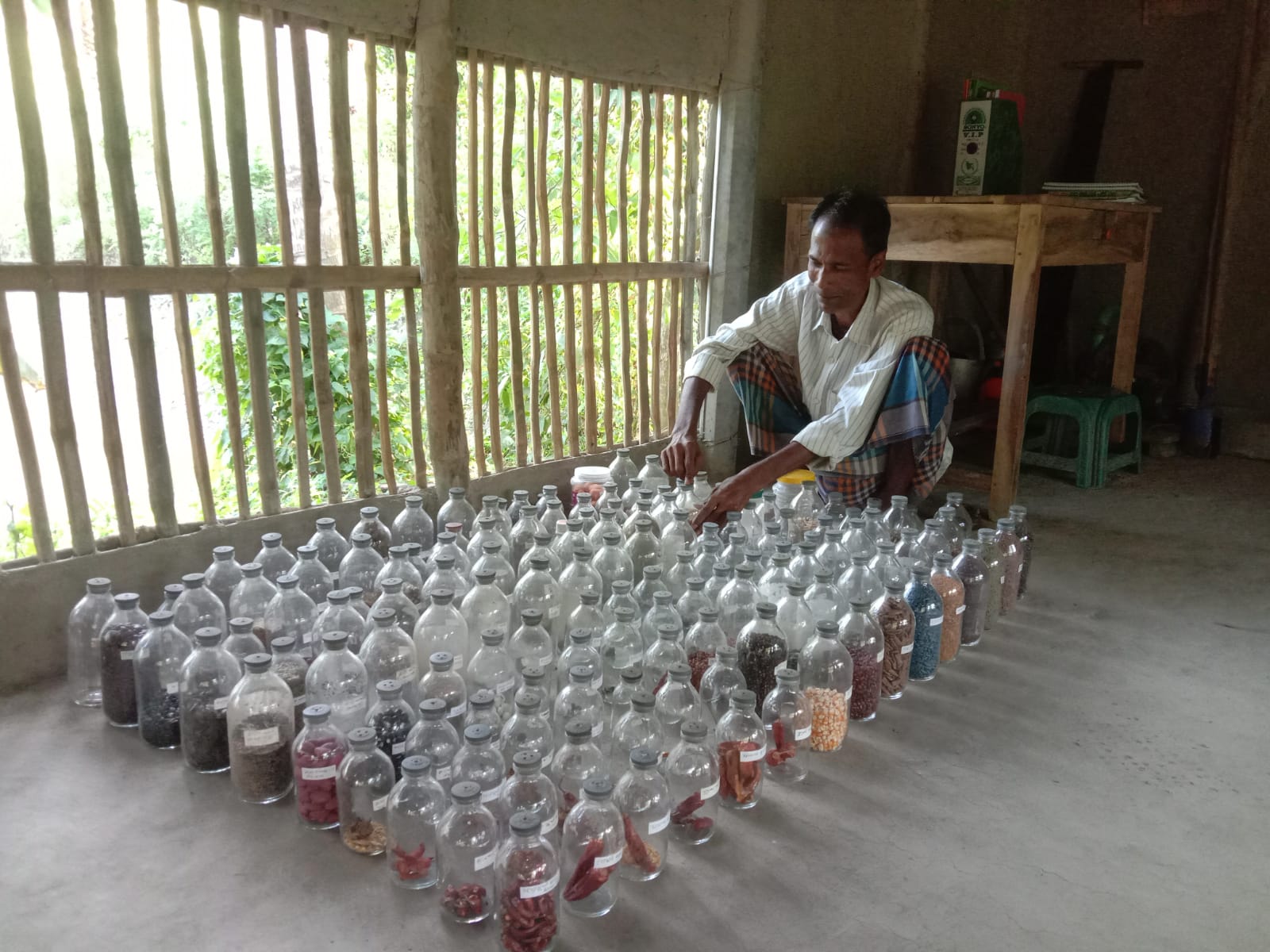
Among the most inspiring observations during my visit was the gradual return of indigenous seeds to farmers’ homes. In almost every household, rice, beans, chilies, spices, and vegetable seeds were carefully stored in jars, cloth bags, or glass bottles. These seeds represent far more than the next planting season; they embody generations of agricultural heritage. Farmer Azizul Rahman of Kharibona has been involved in participatory research on indigenous spices from the very beginning. At his home, I found six traditional spice varieties including fenugreek, ajwain, black cumin, sweet fennel, and saluki which are carefully preserved. Every year he cultivates these crops and exchanges seeds with neighbouring farmers. He said, “At one time I feared these seeds would disappear forever,” he said. “Now people come looking for them again. I give them seeds, they cultivate them, and later they pass them on to others. That is how seeds survive.” Listening to him, it became clear that seeds are much more than agricultural inputs rather they are social connections. Seeds conserved in one farmer’s home can become the foundation of another family’s food security. Through this exchange, communities build resilient local seed systems that strengthen their capacity to adapt to climate change.
Homestead farming: feeding the family first
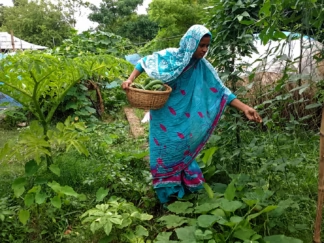
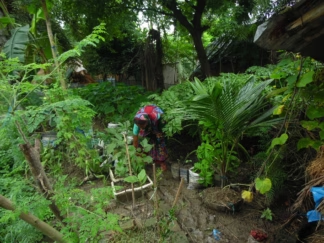
Perhaps the greatest surprise of my visit was the transformation of household courtyards. Spaces that are often overlooked in agricultural planning have become centres of food production, nutrition, seed conservation, and biodiversity. Farmer Shahana Begum proudly guided me through her homestead garden, where papaya, leafy vegetables, indigenous beans, spices, and fruit trees formed a small but highly diverse agroecosystem. Smiling, she explained, “I cultivate papaya on two bighas of land using only organic fertilizer and botanical pesticides. I produce the compost myself at home. After meeting my own farming needs, I sell the surplus compost and earn between BDT 1,000 and 1,500 every month. Earlier, the land around our house remained unused. Now it is full of indigenous vegetables. We eat them ourselves and also sell the surplus.”
Her experience reflects one of the core principles of agroecology. Production is not driven primarily by the market; it begins with meeting the nutritional needs of the family. Only the surplus is sold. In this way, food once again returns to the control of farming households.
The Relationship between soil and farming
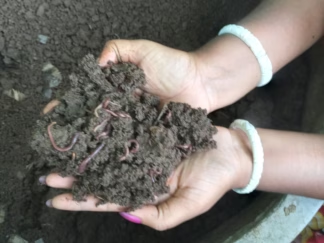
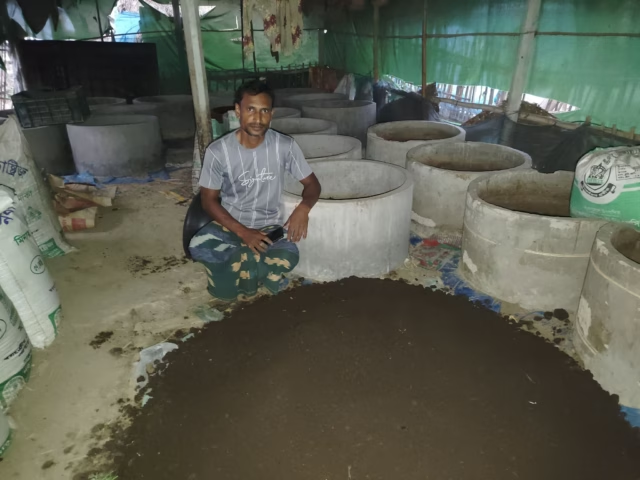
Leaving Shahana Begum’s homestead, we walked to a neighbouring household where rows of vermicompost beds lay neatly arranged beneath a large shed. Earthworms worked tirelessly beneath the moist compost, while bags of finished organic fertilizer were drying nearby. In another corner, a large blue drum held a mixture of neem leaves, neem seeds, mahogany fruits, Bishkatali (a locally available medicinal plant), cow urine, and extracts from other indigenous plants ingredients used to prepare botanical pesticides. The farmers explained that these practices are no longer experimental; they have become an integral part of their everyday farming system. According to observations and records maintained by farmer-researcher Raihan Kabir Ranju, around 40 farmers now produce vermicompost on a regular basis. Many also prepare different types of compost, quick compost, and other organic fertilizers. After meeting the nutrient needs of their own farms, they either sell the surplus or exchange it with neighbouring farmers. Likewise, farmers in almost every village prepare a range of botanical pesticides using locally available materials. This marks a significant shift in farming practices. In the past, farmers would immediately purchase chemical pesticides whenever they noticed pest infestations. Today, they first apply homemade botanical pesticides. As a result, production costs have fallen, beneficial insects are being protected, soil biodiversity is gradually recovering, and farmers have become less dependent on external agricultural inputs. In a drought-prone landscape like the Barind region, this transformation carries important scientific significance. Organic fertilizers enrich soil organic matter, improve the soil’s capacity to retain moisture, and stimulate microbial activity. Consequently, the soil remains moist for longer periods, an invaluable advantage as climate change prolongs droughts and intensifies water scarcity. Here, organic fertilizer is not simply a soil amendment; it is an effective locally developed strategy for climate adaptation.
Agrobiodiversity: Many forms of life
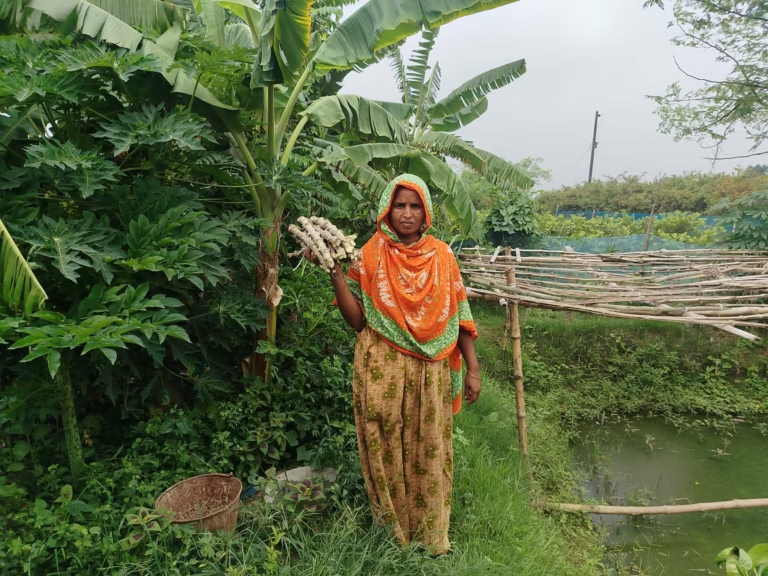
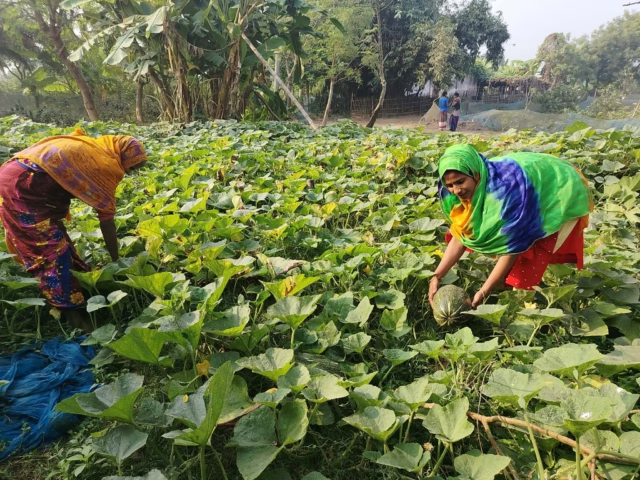
Another defining feature of agroecological practice in the Barind region is the revival of agrobiodiversity. Over the past decade, Raihan Kabir Ranju and local farmers have carried out farmer-led research not only on indigenous rice but also on a wide range of traditional crops and vegetables. Field trials have included approximately ten indigenous spice varieties, five native bean varieties, twenty traditional eggplant varieties, twenty local chili varieties, seven cassava varieties, and numerous indigenous vegetables. Not every variety proved equally successful, but those best adapted to the local environment were selected and gradually expanded by the farmers themselves. Monirul Islam of Golabari village now regularly cultivates indigenous bean varieties such as Lal Motori, Green Motori, and Ghittakali. Pointing to the bamboo trellis in his courtyard, he said, “These bean varieties produce abundant harvests and taste excellent. Most importantly, I save my own seeds. I no longer have to buy seeds from the market every year.” His words reflected more than improved production they conveyed a renewed sense of independence. When farmers regain ownership of their seeds, they regain control over their agricultural future. Similarly, cassava, indigenous eggplants, local chilies, native potatoes, drumstick trees, pumpkins, elephant foot yam, leafy vegetables, and many other traditional crops have become part of the daily diets of nearly 4,000 households across 26 villages. This diversity enriches family nutrition and food culture and strengthens resilience to climate change. Even if one crop fails, others continue to provide food and income. In agroecological terms, this is known as building resilience through diversity.
Local chickens: A small Initiative with a big impact
As we walked through the villages, one striking feature became immediately apparent, the noticeable increase in indigenous chickens in almost every household. Different local breeds could be seen roaming freely, distinguished by variations in neck feathers, leg size, tail length, and even unique feather crests. Several years ago, Raihan Kabir Ranju introduced the indigenous Khopanashi chicken breed from Gaibandha, initially distributing chicks among a small group of farmers for trial rearing. Through farmer-to-farmer exchange of chicks, the breed gradually spread throughout the area. Today, more than one hundred households are rearing these indigenous chickens. Watching her flock forage around the yard, Rubina Begum of Kharibona village explained, “These chickens are more resistant to disease, lay more eggs, and are well adapted to our local climate. That’s why this is now the breed we prefer to raise.” At first glance, this may appear to be a modest initiative. From an agroecological perspective, however, it is remarkably significant. Indigenous chickens improve household nutrition by providing eggs and meat, generate additional income for women through egg sales, and their manure is recycled into compost production. One activity reinforces another, creating a self-sustaining farming system.
This interconnectedness lies at the heart of agroecology. No element exists in isolation; every component supports and strengthens the others, forming a resilient and integrated agricultural ecosystem.
Farmers’ rights and climate Justice in practice
Perhaps the most important lesson from this journey lies here. Agroecology is often narrowly understood as organic or chemical-free farming. Yet, experiences from the field reveal that agroecology is fundamentally a movement for rights, justice, and community control over local natural resources. For many years, village ponds in several communities of Nachole were leased to influential outsiders. As a result, local people were unable to fish in their own ponds and, in many cases, even faced restrictions on using the water for irrigation or household purposes. Although these natural resources were located within the villages, control over them remained in the hands of outsiders. Through organized community action, dialogue, and sustained engagement with government authorities, the practical user rights to four village ponds in Nurpur, Belpukur, Paikra, and Kasba were eventually restored to local communities. Standing beside one of the ponds in Nurpur, farmer Salauddin reflected on the transformation saying, “We were once unable to catch fish in our own village pond. Now we cultivate fish ourselves, eat the fish we produce, and use the water for our daily needs. It has made a tremendous difference to our lives.” His words tell more than the story of a single pond. They reflect a broader struggle to reclaim collective rights over shared natural resources. Climate justice is not only about reducing global carbon emissions; it is equally about ensuring that local communities have equitable rights to water, land, seeds, forests, and wetlands. The experience of the Barind region vividly demonstrates this reality.
The Growth of a Grassroots Movement
What began in 2013 as an initiative in a single village has now spread across 26 villages. Nearly 4,000 households are producing safe food for their families. Hundreds of farming families are conserving indigenous seeds, exchanging planting materials, producing organic fertilizers, selecting locally adapted crop varieties, and mentoring new farmers. Most importantly, this transformation is neither subsidy-driven nor project-dependent. It is rooted in people’s knowledge, mutual cooperation, and community-based learning. That is precisely why the movement holds such strong potential for long-term sustainability.
The farmer-led agroecology
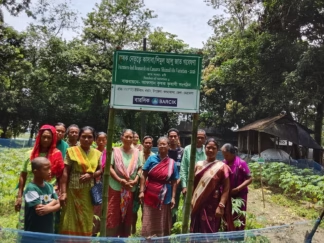
Whether in Kharibona, Nurpur, Golabari, Paikra, or Kasava, one realization remained constant throughout my visit: the farmers here are not beneficiaries of development projects, nor are they passive observers of change. They are researchers, teachers, innovators, and leaders of transformation. At a time when farmer-led agroecology is gaining increasing international attention, the Barind experience stands as a compelling real-world example. Farmers here do not simply adopt technologies developed elsewhere. They conduct their own experiments, evaluate results, learn from failures, identify the most suitable crop varieties, and share their knowledge with fellow farmers. Knowledge is not treated as the exclusive property of research institutions; it is regarded as a shared community resource that continues to evolve through collective learning, experimentation, and exchange. This is where the contribution of farmer-researcher Raihan Kabir Ranju becomes particularly significant. Rather than promoting ready-made technologies or imposing external solutions, he helped to establish a learning process that recognizes and respects farmers’ own knowledge and experience. Farmers learned from their realities, experimented in their own fields, and made decisions based on their own observations. Consequently, the transformation taking place today belongs to the farmers themselves. Along the way, a vibrant culture of peer-to-peer learning has emerged. Successful experiences from one village have spread to another. Seeds conserved in one household have created new opportunities in neighbouring communities. The experience of one woman farmer producing organic fertilizer has inspired many others to follow. This continuous exchange of knowledge has become the foundation of a living agroecology movement.
Agroecology is far more than agrochemical-free farming
In Bangladesh, agroecology is still widely perceived as simply organic farming or cultivation without chemical fertilizers and pesticides. However, spending time with farmers in the Barind region reveals that agroecology represents a far broader process of social, environmental, and economic transformation. The journey begins with restoring soil health, but it does not end there. It encompasses the recovery of indigenous seeds and local crop varieties, the conservation of agrobiodiversity, the integration of farmers’ traditional knowledge into research and innovation, and the creation of dynamic systems of farmer-to-farmer learning. Women play a central role in this transformation. They are no longer merely supporting family farming; they are leading seed conservation, producing organic fertilizers and botanical pesticides, establishing nutrition gardens, and ensuring the production of safe, nutritious food for their households. At the same time, production costs are declining, dependence on chemical inputs is decreasing, soil fertility and biodiversity are being restored, and local communities are strengthening the sustainable management of natural resources. Perhaps the most significant change is that farmers are reclaiming their ability to make decisions about their own agriculture—choosing which seeds to cultivate, determining how crops should be grown, and deciding how knowledge should be shared within their communities. This demonstrates that agroecology is not merely a farming technique or production system. It is a development philosophy that rebuilds the relationship between people, nature, and justice. The Barind experience clearly shows that when farmers’ knowledge is respected, local resources are valued, and communities actively participate in decision-making, agroecology becomes a powerful foundation for climate adaptation, food sovereignty, seed sovereignty, and sustainable rural livelihoods. Ultimately, agroecology is much more than an agricultural practice. It is a vision of development founded on the interconnected relationships between people, culture, nature, and justice.
Food Sovereignty the right to produce food with dignity
During my visit, almost every family I met shared the same experience that they now purchase far fewer vegetables from the market than they did in the past. Vegetables grown in their homestead gardens, along with indigenous spices, fruits, eggs, and seasonal crops, have greatly enriched their family diets. This transformation is about far more than saving money. Food sovereignty is built on the principle that people have the right to make decisions about their own food systems. Farmers themselves decide what to grow, what to eat, how to cultivate their crops, and which seeds to use. Conversations with women farmers in Kharibona revealed that safe and nutritious food is no longer considered a luxury; it has become an integral part of everyday life. Setting aside pesticide-free vegetables for children, conserving seeds, and maintaining a diverse range of home-produced foods have become common household practices. This marks a significant shift. In an era of climate change, food security alone is no longer sufficient. The quality of food, dietary diversity, and local control over food systems are equally essential for building resilient communities.
Seed sovereignty as the foundation of the future
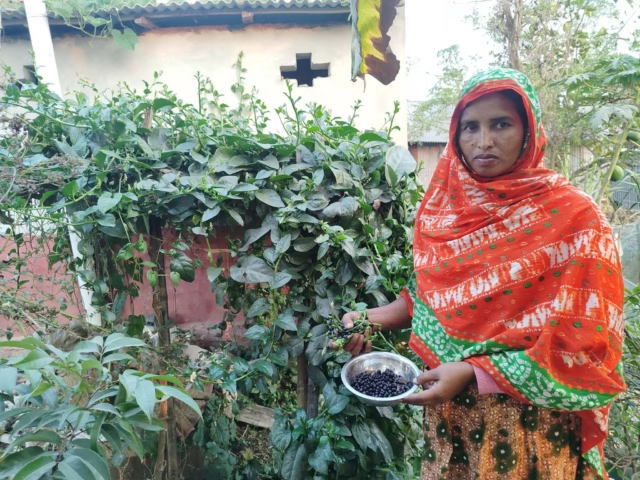
One lesson emerged clearly from conversations with farmers across the Barind region: farmers who conserve their own seeds face the future with far greater confidence. Today, many households save their own rice, bean, chili, spice, and vegetable seeds, exchange them with neighbours, and distribute them to new farmers. This is more than an agricultural practice; it is a social and political statement. Farmers’ rights over seeds are inseparable from their rights over agriculture itself. A farmer who must purchase seeds from the market every year remains dependent on external suppliers. In contrast, a farmer who conserves and reproduces seeds at home enjoys far greater independence and resilience. Throughout the villages, I found that farmers routinely conserve seeds for vegetables and several field crops, with vegetable seed saving being particularly widespread. Although they may still rely on the market for some crops, this practice has already given them a significant degree of autonomy. Such independence becomes even more valuable in the face of climate change. Indigenous crop varieties that have adapted to local environmental conditions over generations are often better equipped to withstand climatic uncertainty and will continue to play a vital role in strengthening long-term resilience.
Connecting local experience with global dialogue through Green Coalition
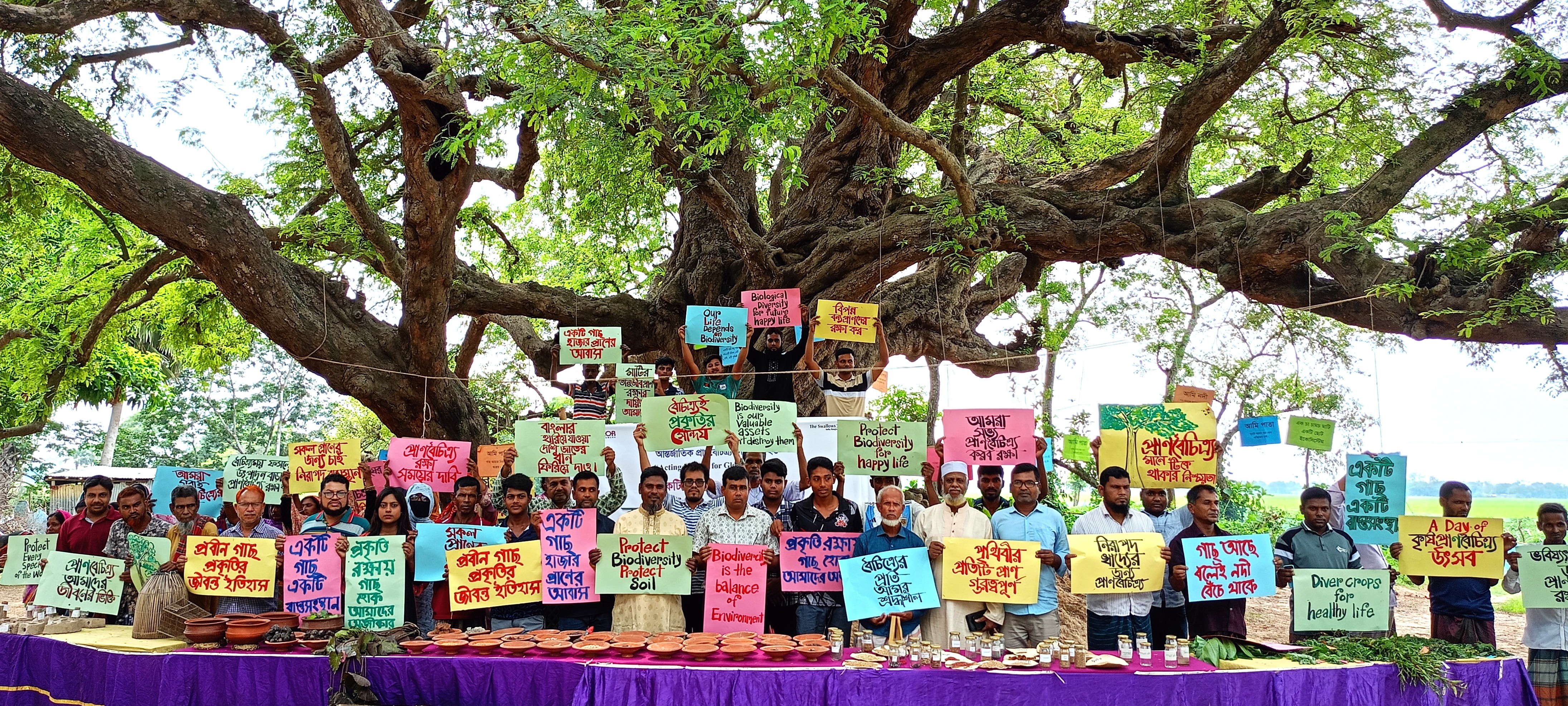
The experience of the Barind region extends far beyond the story of a handful of villages. It contributes to a broader national and international conversation on sustainable agriculture, climate adaptation, and equitable development. For the last two years, the Green Coalition has advocated for farmer-led agroecology, food sovereignty, seed sovereignty, biodiversity conservation, climate justice, community rights over natural resources, and locally driven solutions grounded in indigenous knowledge. In the villages of the Barind region, these principles are no longer theoretical rather they are being translated into everyday practice. Farmers here are more than food producers. They stand on the frontline of climate adaptation. They are not merely recipients of development assistance; they are creators of knowledge and innovators of practical solutions. They are safeguarding not only their own livelihoods but also the indigenous seeds, fertile soils, water resources, and agricultural biodiversity that future generations will depend upon. At a time when the environmental limitations of industrial agriculture are being debated around the world, the farmers of Nachole offer a compelling alternative. They demonstrate that sustainable agriculture is not driven solely by advanced technologies; it is equally rooted in local knowledge, collective action, and harmonious coexistence with nature.
People are the greatest force for change
As I began my journey home after three days in the Barind region, one thought stayed with me: there was still so much left to learn. I knew I would have to return. The experience made it clear that the greatest force behind this remarkable transformation is neither a development project, financial support, nor any single individual. It is the people themselves. When a farmer saves seeds from one season to the next, they are safeguarding the future. When a woman farmer prepares organic fertilizer in her own courtyard and produces safe food for her family, she is protecting her household and the health of an entire generation and contributing to nation-building. When a community regains the right to manage its own village pond, it does more than create opportunities for fish farming and reclaims ownership of its natural resources. When one farmer shares knowledge and experience with another, they do more than transfer information; they sow the seeds of a movement. The experience of Nachole in the drought-prone Barind region offers an important lesson. In an era of increasing climate uncertainty, adaptation is not simply about building infrastructure. It is about strengthening people’s resilience, valuing local knowledge, conserving biodiversity, fostering social solidarity, and creating agricultural systems grounded in justice and sustainability. The long journey of the farmers and women farmers who have worked alongside farmer-researcher Md. Raihan Kabir Ranju is therefore much more than the story of a successful agricultural initiative. It is the story of a profound social transformation one in which farmers’ knowledge has returned to the centre of agriculture, indigenous seeds have found their way back into people’s homes, food has returned to the hands of families, and new seeds of hope, confidence, and resilience have taken root in the red soils of the drought-prone Barind region. The movement may still be modest in scale, but there is every reason to believe it will continue to grow. At a time when the world is increasingly concerned about climate change, biodiversity loss, and the future of food systems, the quiet farmers of Nachole offer a powerful message: the path to a sustainable future does not lie in working against nature. It lies in working with nature, empowering farmers, and placing people’s rights at the heart of development.