Introduction
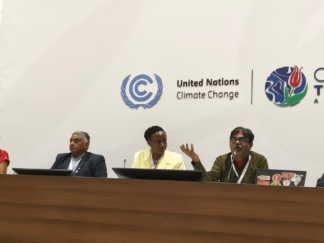
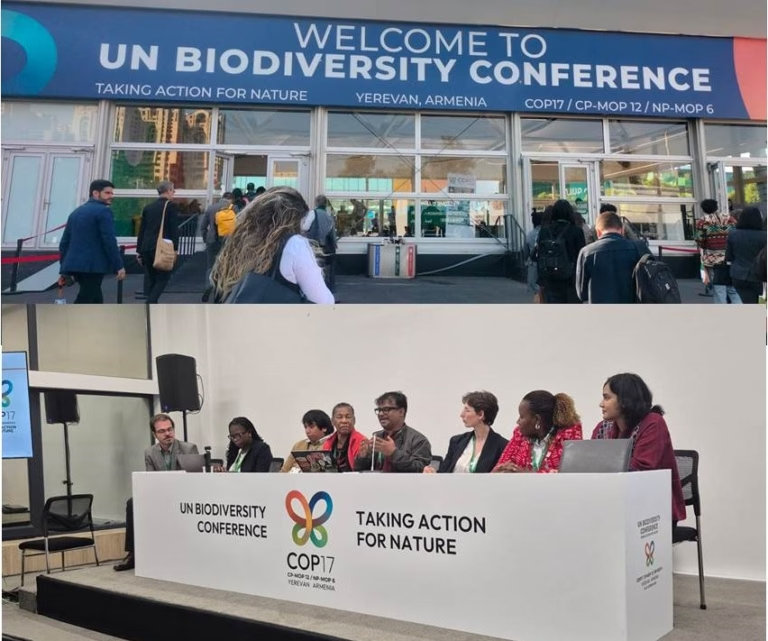
Pavel Partha, Director BARCIK participated as an observer in the Seventeenth Conference of the Parties (COP-17) to the Convention on Biological Diversity (CBD), held in Yerevan, Armenia, from 26 to 30 October 2026. Oxfam supported his travel, while BARCIK covered accommodation and food expenses. During the conference, he on behalf of BARCIK participated in three important events on Indigenous knowledge, ecosystem restoration, agroecology and pesticide reduction. These included one joint event with SAFE and ICARSIS, an official side event jointly organized with Oxfam, and a pavilion event co-organized with CIRAD, the PRETAG initiative and other international organizations. Pavel Partha spoke at two events and moderated the official side event. Beyond these engagements, he attended several group meetings, issue-based side events and discussions, with particular attention to CBD Article 8(j), which concerns traditional knowledge and the rights of Indigenous Peoples and Local Communities (IPLCs). The conference provided an important opportunity to share BARCIK’s experience from Bangladesh, exchange knowledge with international organizations and practitioners, and strengthen its engagement in global discussions on biodiversity conservation.
The following sections highlight the objectives, participation, presentations and outcomes of the three events.
Event 1: Exploring Indigenous Sustainability – The Climate Solution Ignored
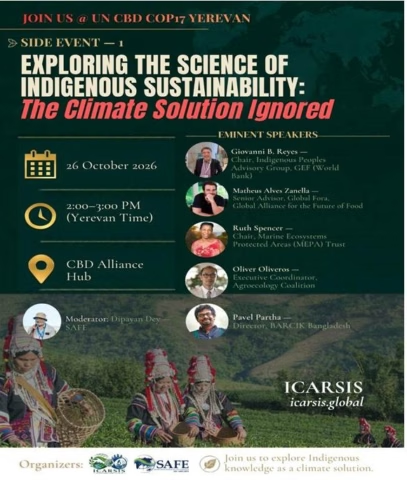
Date: 26 October 2026
Venue: CBD Alliance Hub
Organizers: SAFE and ICARSIS (jointly)
The event, titled “Exploring Indigenous Sustainability: The Climate Solution Ignored,” focused on the importance of Indigenous knowledge, practices and community-led approaches in addressing climate and environmental challenges. It highlighted how Indigenous Peoples and local communities contribute to sustainability through their relationships with nature, traditional resource management systems and generations of ecological knowledge. Pavel Partha participated as a speaker, sharing perspectives from Bangladesh and BARCIK’s experience in working with Indigenous Peoples and local communities. His participation helped to bring community-based knowledge and practices from Bangladesh into the international discussion on climate justice and biodiversity conservation. Other speakers included Giovanni B. Rayes, Chair of the Indigenous Peoples Advisory Working Group of the Global Environment Facility (GEF); Matheus Alves Zanella of the Global Alliance for the Future of Food; Ruth Spencer, Chair of the Marine Ecosystems Protected Areas (MEPA) Trust; and Oliver Oliveros, Executive Coordinator of the Agroecology Coalition.
Outcome and significance
The event created an opportunity to connect Indigenous sustainability practices with wider global discussions on climate action and biodiversity. BARCIK’s participation contributed a Bangladesh perspective to the dialogue and reinforced the importance of recognizing Indigenous knowledge and community leadership as essential elements of sustainable solutions.
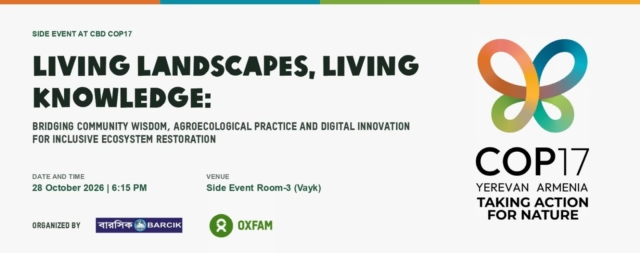
Event 2: Living Landscapes, Living Knowledge – Bridging Community Wisdom, Agroecological Practice and Digital Innovation for Inclusive Ecosystem Restoration
Date: 28 October 2026
Venue: Vayk Side Event Room
Organizers: BARCIK and Oxfam
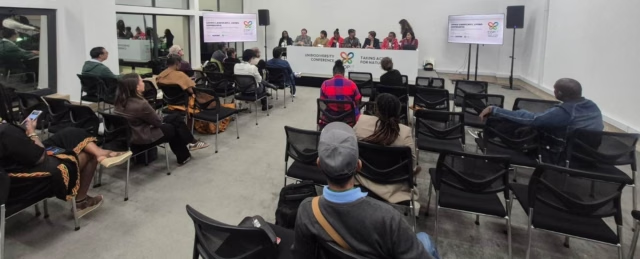
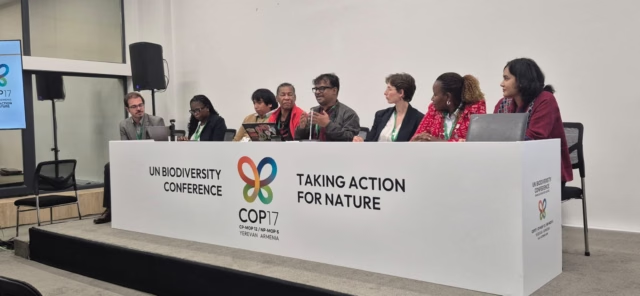
BARCIK and Oxfam jointly organized this official side event to explore how community knowledge, agroecological practices, science and digital innovation can contribute to inclusive ecosystem restoration. The event was based on the understanding that landscapes are shaped by the relationships among biodiversity, ecosystems, people, knowledge and culture. Indigenous Peoples and local communities hold generations of knowledge about local species, ecosystem functions, natural resource management and landscape changes. However, such knowledge often remains under-recognized in conventional conservation and restoration initiatives. The discussion highlighted the interconnected challenges of biodiversity loss and the erosion of traditional knowledge, particularly in areas where long-term agrochemical-intensive farming has degraded soils and simplified ecosystems. Drawing on community engagement across Bangladesh’s diverse agroecological landscapes, the session explored ways to position local communities not merely as beneficiaries but as knowledge holders, decision-makers and stewards of ecosystem restoration. Pavel Partha moderated the session, while Elham Hussain of Oxfam Bangladesh delivered the main presentation. The panel brought together speakers from different countries and organizations that include:
- Charlotte Hourdin, PRETAG/CIRAD, France
- Matheus Alves Zanella, Global Alliance for the Future of Food
- Mme Ndeye Maimouna Diene, Pesticide Action Network (PAN) Africa, Senegal
- Ruth Spencer, Chair, MEPA Trust, Antigua and Barbuda
- Mary Irungu, PELUM Kenya, Kenya
- Eliseo Ruzol Sr., MASIPAG, Philippines
The panel discussed how participatory Indigenous knowledge systems, community-led agroecology, biological inputs, digital and spatial technologies, and Earth Observation can complement one another in identifying restoration priorities, guiding locally appropriate interventions and monitoring ecosystem recovery. The discussion also connected these approaches with the Kunming-Montreal Global Biodiversity Framework (KMGBF), particularly Targets 2, 7 and 10, which address ecosystem restoration, pesticide-related risks and sustainable agriculture.
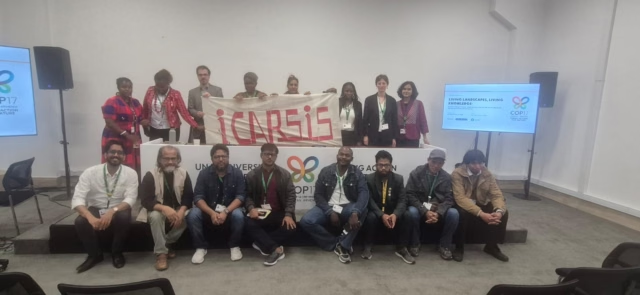
Dr. Dipayan Dey of SAFE-India and ICARSIS also participated in the event. He presented a documentary film, inaugurated the global network ICARSIS and delivered the concluding remarks.
Outcome and significance
The event provided an international platform for sharing experiences and exploring practical connections between community knowledge, agroecology and technological innovation. It strengthened BARCIK’s visibility as an organization working to connect local knowledge and community-led initiatives with wider biodiversity and ecosystem restoration agendas. The participation of experts from different countries also created opportunities for further collaboration and knowledge exchange.
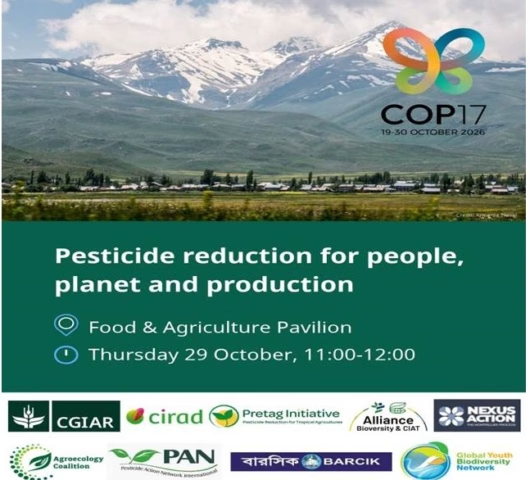
Event 3: Pesticide Reduction for People, Planet and Production
Date: 29 October 2026
Venue: Food and Agriculture Pavilion
Organizers: CIRAD and the PRETAG initiative
Co-organizers: CGIAR, Alliance of Bioversity International and CIAT, Nexus Action, Agroecology Coalition, Pesticide Action Network, Global Youth Biodiversity Network and BARCIK.
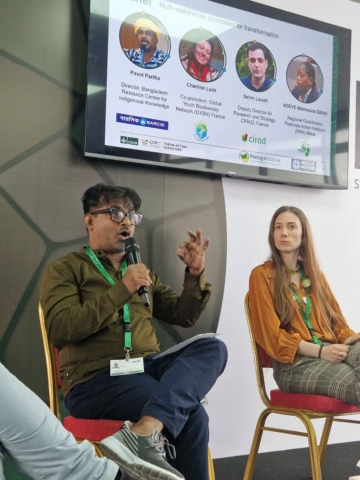
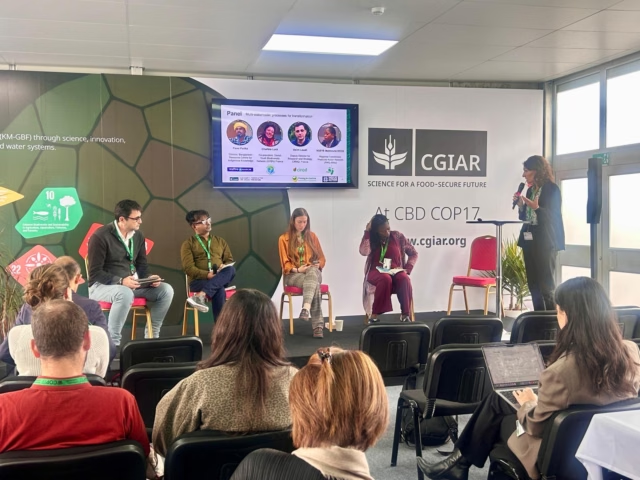
This event focused on the urgent need to reduce the use and risks of synthetic pesticides to protect human health, biodiversity and ecosystems while supporting sustainable agricultural production. The discussion highlighted the relevance of Target 7 of the Kunming-Montreal Global Biodiversity Framework, which calls for coordinated action to reduce pesticide-related risks and use through context-specific approaches, including agroecological practices. Charlotte Hourdin of PRETAG/CIRAD, France, delivered the key presentation. The session brought together researchers, development practitioners, policymakers and representatives of international networks to discuss the challenges and opportunities of reducing pesticide dependence. Charline Luck, Co-President of the Global Youth Biodiversity Network, France, emphasized the importance of involving young people, particularly young farmers and consumers, in agricultural and biodiversity decision-making. She argued that young people should be recognized as partners in shaping policies and programmes rather than merely as beneficiaries or participants. She also discussed the barriers that prevent farmers from adopting agroecological practices and shared recommendations for overcoming these obstacles. Selim Louafi, Deputy Director for Research and Strategy at CIRAD and a founding member of the Nexus Action–Montpellier Process, discussed the role of multi-stakeholder platforms in bringing together farmers, researchers, businesses and policymakers. He highlighted how such platforms can transform dialogue into collective action to accelerate pesticide reduction.
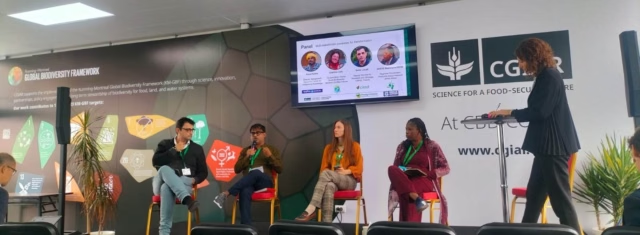
Ndeye Maimouna Diene, Regional Coordinator of PAN Africa, shared experiences from West Africa on collaboration to reduce highly hazardous pesticides while protecting biodiversity and human health. She presented examples from PAN Africa’s agroecological learning farms, demonstrating how specific practices can reduce pesticide dependence. She also emphasized the importance of supportive regulatory and policy measures to scale up these approaches.
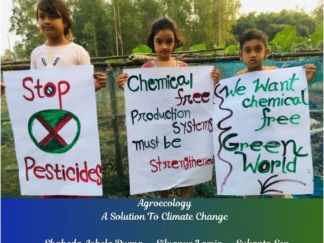
Pavel Partha participated as a speaker and presented BARCIK’s experience in promoting pesticide-free agroecology and community-led initiatives in Bangladesh. He discussed how herbicide use affects medicinal plants, uncultivated food plants and other elements of traditional knowledge. He also explained how Indigenous Peoples and local communities are responding to these challenges through local initiatives and collective action. Drawing on BARCIK’s experience, he highlighted community-led agroecological models that help to reducing the impacts of synthetic pesticides on biodiversity, human health and local livelihoods. He said that Indigenous and local knowledge must be recognized in decision-making related to pesticide reduction and ecosystem restoration. He also referred to Bangladesh’s recent positive policy developments, including the formation of a high-level committee on pesticide reduction and the recent ban on the herbicide Paraquat. He connected these developments with the biodiversity conservation and ecosystem restoration commitments under the KMGBF, including its 23 targets. Rolph Payet, Executive Secretary of the Secretariat of the Basel, Rotterdam and Stockholm Conventions, delivered the concluding remarks.
Outcome and significance
The event strengthened the discussion on pesticide reduction as a shared responsibility involving farmers, young people, researchers, civil society organizations and policymakers. BARCIK’s contribution brought practical evidence from Bangladesh into the international dialogue, particularly on the effects of herbicides on local biodiversity and traditional knowledge. Its presentation also demonstrated how people-led agroecology can offer practical pathways towards reducing pesticide dependence and protecting community livelihoods.
Overall Outcomes and Learning for BARCIK
Participation in CBD COP-17 provided BARCIK with an important opportunity to present its work and perspectives in an international policy and knowledge-sharing space. Through the three events, BARCIK contributed to discussions on Indigenous sustainability, inclusive ecosystem restoration, agroecology and pesticide reduction.
Several key outcomes and learning points emerged:
- Greater international visibility for BARCIK: BARCIK’s role as a co-organizer, speaker and moderator helped to present its community-based experience and approaches to an international audience.
- Recognition of Indigenous and local knowledge: Discussions around CBD Article 8(j) reinforced the importance of protecting traditional knowledge and recognizing the rights and roles of Indigenous Peoples and local communities in biodiversity conservation.
- Strengthening the link between knowledge and restoration: The official side event demonstrated the value of combining community knowledge, agroecological practices, scientific research and digital innovation in ecosystem restoration.
- Promoting pesticide-free agroecology: BARCIK shared its experience on working with local communities to reduce pesticide dependence and protect biodiversity, human health and livelihoods. The discussions also offered insights into policy advocacy and multi-stakeholder collaboration.
- Opportunities for international networking: Engagement with organizations and representatives from different countries created opportunities for future exchange, cooperation and joint initiatives.
- Learning for future work in Bangladesh: The knowledge and experiences gained from the conference can contribute to BARCIK’s ongoing work on Indigenous knowledge protection, biodiversity conservation, community-led ecosystem restoration, agroecology and climate justice.
Conclusion
BARCIK’s participation in CBD COP-17 was significant for presenting its experiences from Bangladesh and for connecting grassroots knowledge and community-led practices with international biodiversity commitments. The three events demonstrated that Indigenous knowledge, agroecology and inclusive community participation are essential to addressing biodiversity loss, restoring ecosystems and reducing pesticide-related risks. The conference has enriched BARCIK’s understanding of global biodiversity discussions, particularly those concerning Indigenous traditional knowledge and the rights of IPLCs under CBD Article 8(j). The learning and networks gained through this participation will provide valuable inputs for BARCIK’s future programmes, advocacy and collaboration to protect biodiversity, promote agroecology and strengthen the rights and capacities of Indigenous Peoples and local communities in Bangladesh.