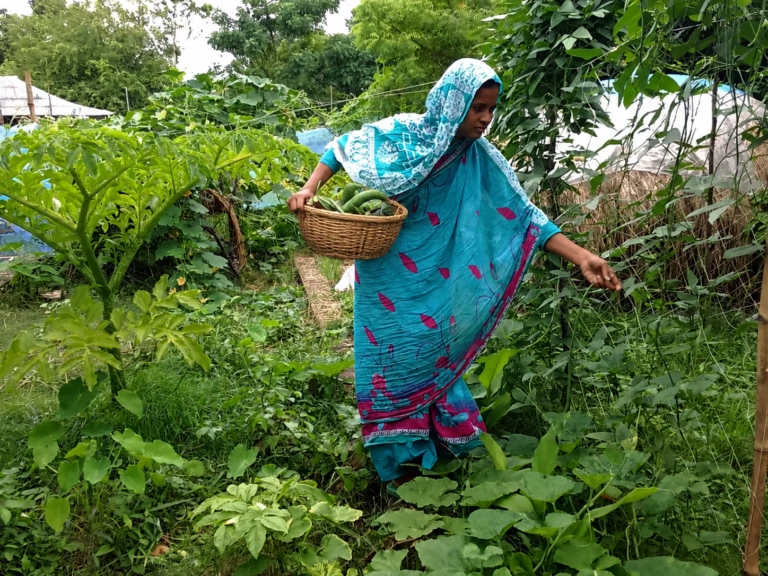
By Habibur Rahman from Shyamnagar, Satkhira
Farida Begum of Kadamtala village in Shyamnagar once struggled to support her family. Her husband, Shahin Gazi, suffers from chronic asthma and could not work regularly as a day laborer, leaving the family trapped in poverty.
Farida is determined to improve their situation and worked tirelessly, sewing clothes at night after completing her household responsibilities. Despite owning 20 decimals of land, she could not cultivate crops because of high soil salinity in the coastal region.
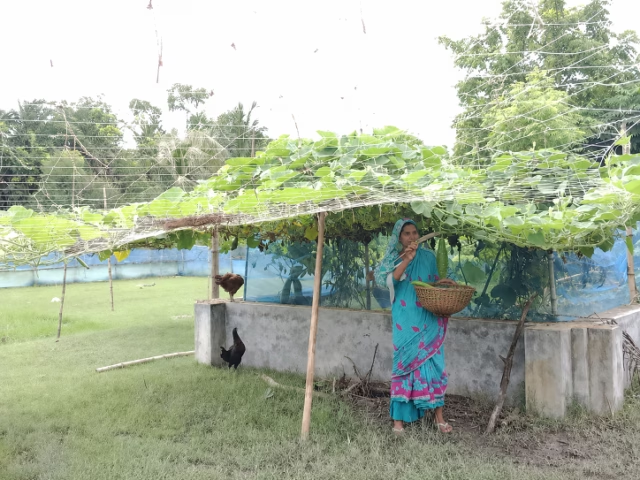
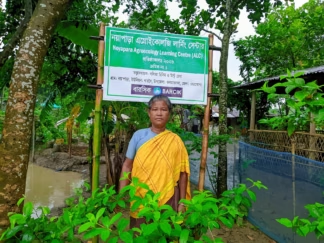
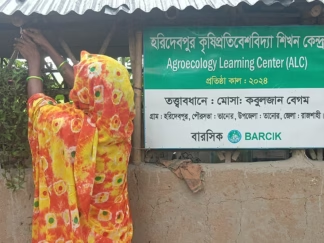
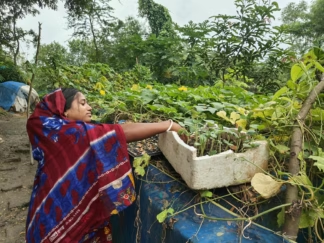
Her life began to change after she met BARCIK in 2026 and participated in the training arranged by the organization. Through training sessions and workshops, she learned several climate-adaptive farming techniques suitable for saline environments, including trellis cultivation, container gardening, sack cultivation, mulching, saline-bed cultivation, and tower gardening.
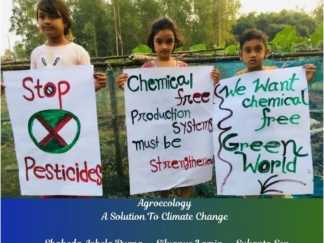
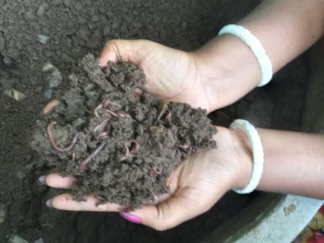
Previously, Farida depended on expensive hybrid seeds, chemical fertilizers, and pesticides, which increased production costs while delivering poor yields. Today, she practices agroecology using indigenous seeds, homemade vermicompost, and organic pesticides.
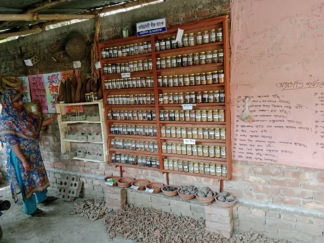
With support from a local seed bank, she now conserves and exchanges diverse local crop varieties. She has also started raising indigenous cattle and poultry alongside vegetable cultivation.
According to Farida, using local seeds and organic inputs has doubled her production while significantly reducing cultivation costs.
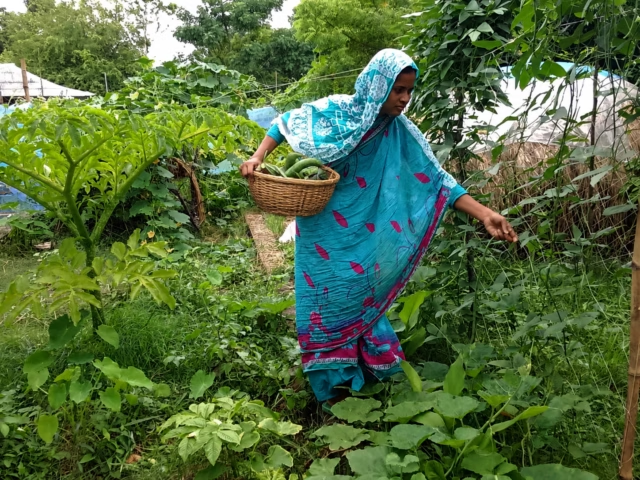
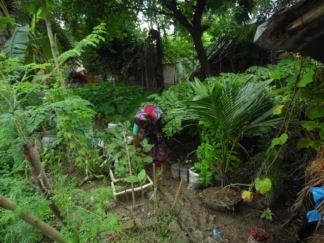
She now produces vegetables and fruits throughout the year, meeting her family’s nutritional needs and selling surplus produce in local markets. The additional income helps her to cover her husband’s medical expenses and her children’s education.
Beyond economic improvement, Farida has gained recognition and respect within her family and community. Once excluded from household decision-making because of financial hardship, she has become an important contributor to her family’s economy and a successful example of climate-resilient farming in her community.