By Biswajit Mondal from Shyamnagar, Satkhira
The southwest coastal region of Bangladesh faces recurring climate and environmental challenges, including salinity, declining soil fertility, increasing dependence on chemical fertilizers and rising production costs. In response, farmers in West Jelekhali village of Munshiganj Union, Shyamnagar, Satkhira, have taken an initiative to produce and use vermicompost locally.
In July–August 2024, BARCIK discussed the benefits and importance of vermicompost with farmers in the village and subsequently provided practical training to interested farmers. Five women farmers received initial support and began producing vermicompost at home for use in vegetable gardens and croplands. Their success encouraged other households to adopt the practice.
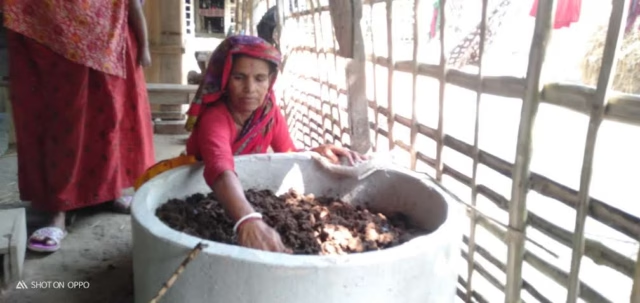
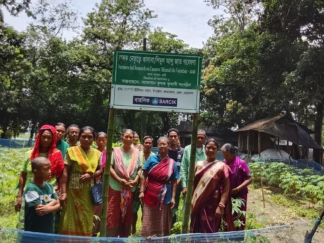
The initiative has gradually expanded from individual households to the wider community. Currently, 46 families in West Jelekhali produce and use vermicompost, creating the potential for the village to become a community-based “Vermicompost Village.”
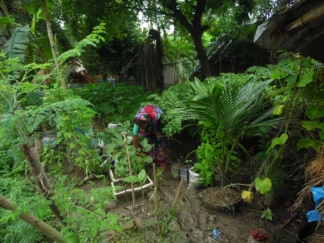
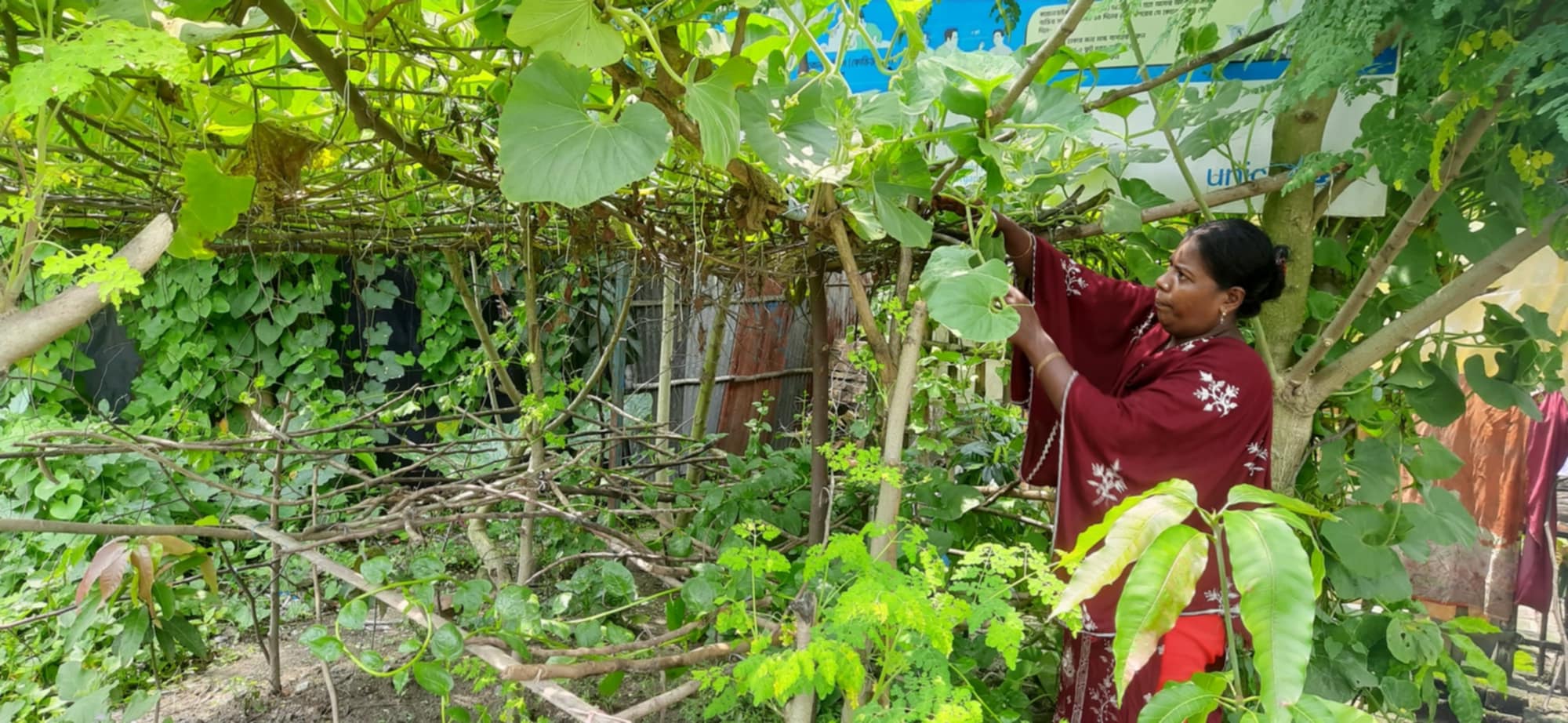
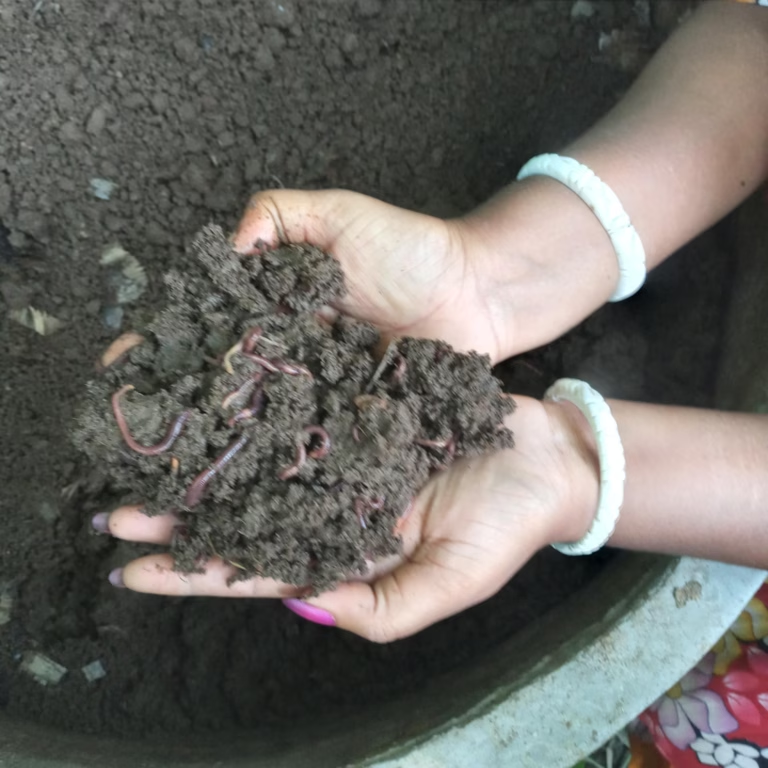
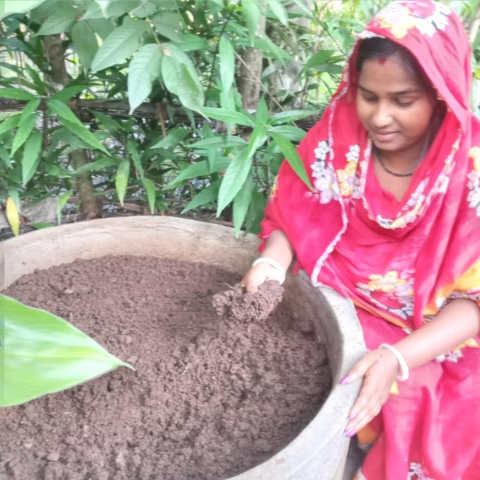
Farmers produce the compost using locally available materials such as cow dung, straw, decomposable agricultural residues and earthworms, with simple containers, earthen pots or cement rings. They use it in vegetable gardens, rice fields and other agricultural activities, while some also sell the compost and earthworms.
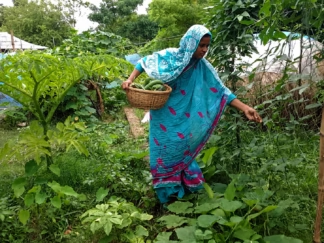
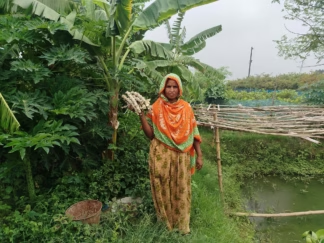
Women farmers have particularly benefited. Bhagabati Rani, for example, said that her expenditure on chemical fertilizer for vegetable cultivation fell from around BDT 2,000 to BDT 800, saving approximately BDT 1,200. Women are also earning additional income by selling vermicompost and earthworms and exchanging them with other farmers.
Farmers Champa Majhi, Falguni and Lata Rani said that although they had previously received agricultural training and inputs from different organizations, practical guidance on producing organic fertilizer at home was particularly useful. They now produce and apply vermicompost themselves and occasionally sell the surplus.
Farmers Bhudhar Mondal and Ganesh Barman focused on its benefits in reducing production costs, improving soil health and reducing pest problems. They believe wider use of vermicompost can help to restoring degraded soil and reduce dependence on chemical fertilizers.
Villagers expressed their interest in making vermicompost a common practice throughout the community. They identified additional training, support for interested households, experience-sharing visits, wider application in different crops and fair prices for agricultural products as priorities.
Although still a small-scale initiative, the West Jelekhali experience is gradually becoming a promising community-led, environmentally friendly agricultural practice. It contributes to soil health, reduced chemical dependency, lower production costs, women’s economic participation and safer farming. With stronger collaboration among farmers, local organizations and government and non-government institutions, West Jelekhali could become a model vermicompost village for Bangladesh’s coastal communities.