By Khalilur Rahman Sheikh Iqbal from Netrokona
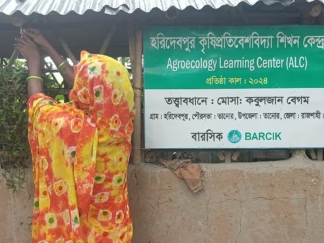
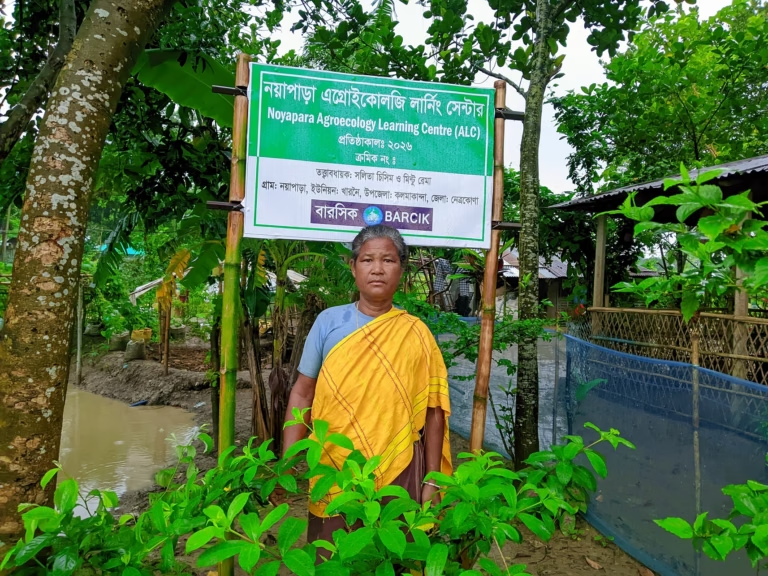
In Nayapara village of Kharnai Union, Kalmakanda, Netrokona, farmer couple Solita Chisim and Mintu Rema have transformed their homestead into a practical learning space for local farmers. The Nayapara Agroecology Learning Center allows farmers to observe, learn, experiment and adapt agroecological practices to their own circumstances. The center promotes local knowledge, native seeds and environmentally friendly farming. Its activities include seed conservation, organic fertilizers and pest management, water-saving irrigation, diversified vegetable production and farmer-led experimentation.

Responding to climate challenges
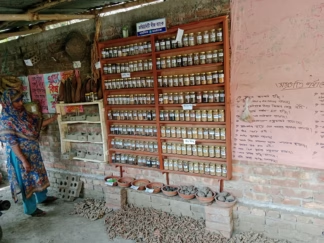
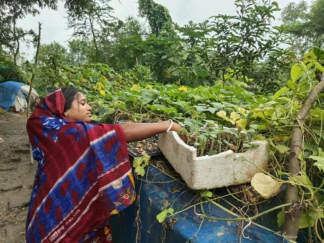
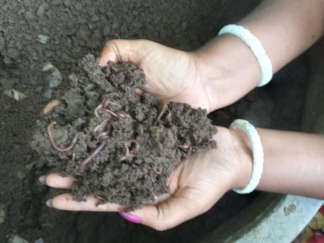
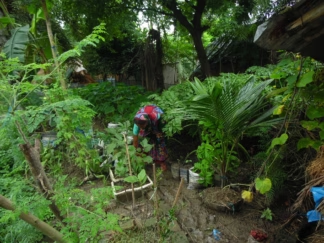
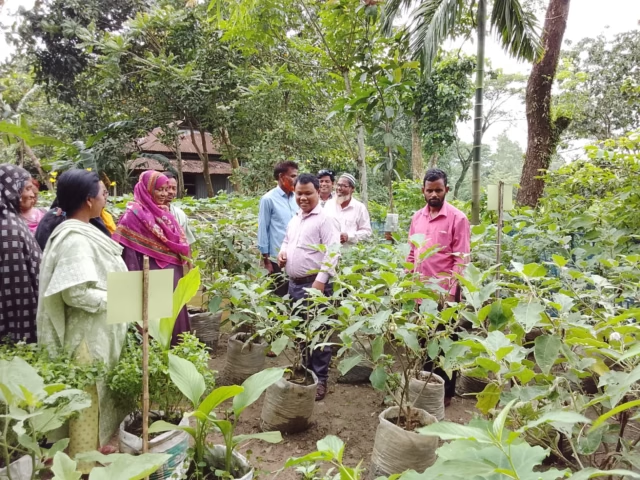
Farmers in the area face sudden flash floods from the Meghalaya hills, drought, irregular rainfall, declining groundwater levels and rising production costs. These challenges make year-round cultivation difficult, particularly for small and marginal farmers. The learning center responds with low-cost, locally appropriate practices. Vegetables are grown in sacks, raised beds, trellises and other space-saving systems, making productive use of homesteads and unused spaces. Water-saving methods such as saline irrigation and the Salta method help maintain soil moisture with less water. Vermicompost, pit compost and kitchen waste-based organic fertilizers improve soil health. Farmers also prepare organic pesticides using locally available ingredients such as neem leaves, chilli, garlic and tobacco. A community seed bank is another important part of the center. Members of the Afsan Farmers’ Organization collect, conserve, exchange and reproduce native rice and vegetable seeds, reducing dependence on purchased seed and helping conserve local varieties.
From learning to income
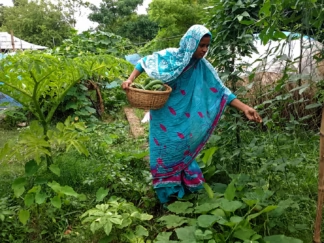
The initiative has brought visible changes to Nayapara. Previously unused spaces are now producing vegetables throughout the year. Families have improved access to fresh food, reduced their dependence on market-bought vegetables and lowered the use of chemical fertilizers and pesticides. Surplus vegetables are sold locally, creating additional household income. Some consumers now visit the farmers’ homes directly to buy fresh, chemical-free produce, strengthening trust between producers and consumers.
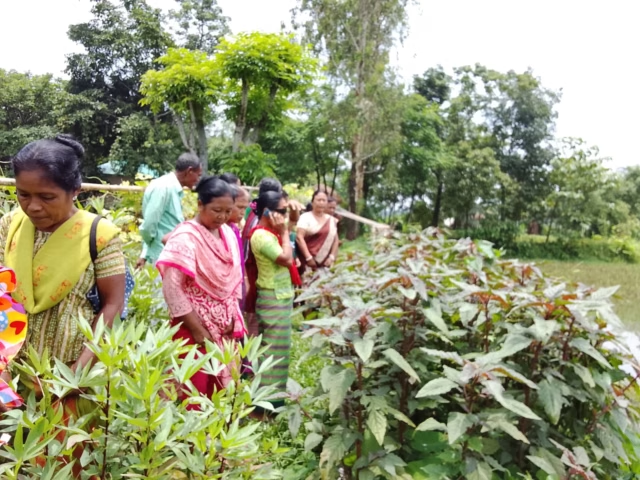
Solita said: “At first, we grew a few vegetables for our family. As we learned different methods, we expanded production. Now our home has become a learning center. Farmers come from different areas to observe and learn. Most importantly, we eat safe food and earn regularly by selling the surplus.” Farmers from Netrokona and nearby villages have visited the center to observe its practices. A 13-member farmer delegation from Netrokona and another 18 farmers from Gobindapur, Bhashankura, Kochugora, Bonbera and Bogadubi visited the center and expressed interest in applying similar methods at home.
A farmer-led model
The center still faces challenges, including access to sufficient organic materials, irrigation during the dry season and the need for continued support to encourage more farmers to shift away from chemical-intensive agriculture. Developing fair markets for organic produce and expanding the community seed bank are also priorities. The experience of Nayapara shows that even limited land can support year-round food production when combined with local knowledge, native seeds and appropriate techniques. It also demonstrates the value of farmer-to-farmer learning. More than a set of farming techniques, agroecology offers a pathway toward safer food, stronger livelihoods, biodiversity conservation and greater food sovereignty.